Metal Roof Installation for Fraser Valley Homes, Barns & Agricultural Buildings
A Red Seal Boilermaker's Guide to Standing Seam, Corrugated & Exposed-Fastener Metal Systems
Last updated: February 2026
Safety First: Metal Roofing Hazards
Metal panels create unique dangers that shingle installers may not anticipate.
- Wet metal is essentially a skating rink -- soft-soled shoes with rubber grip are mandatory, and even then caution is required
- Panel edges slice through standard work gloves -- cut-resistant gloves rated for sheet metal are non-negotiable
- Long panels catch wind like sails -- a gust can rip a 30-foot panel from your hands and send it airborne
- Metal conducts electricity -- maintain clearance from all overhead power lines and never work during electrical storms
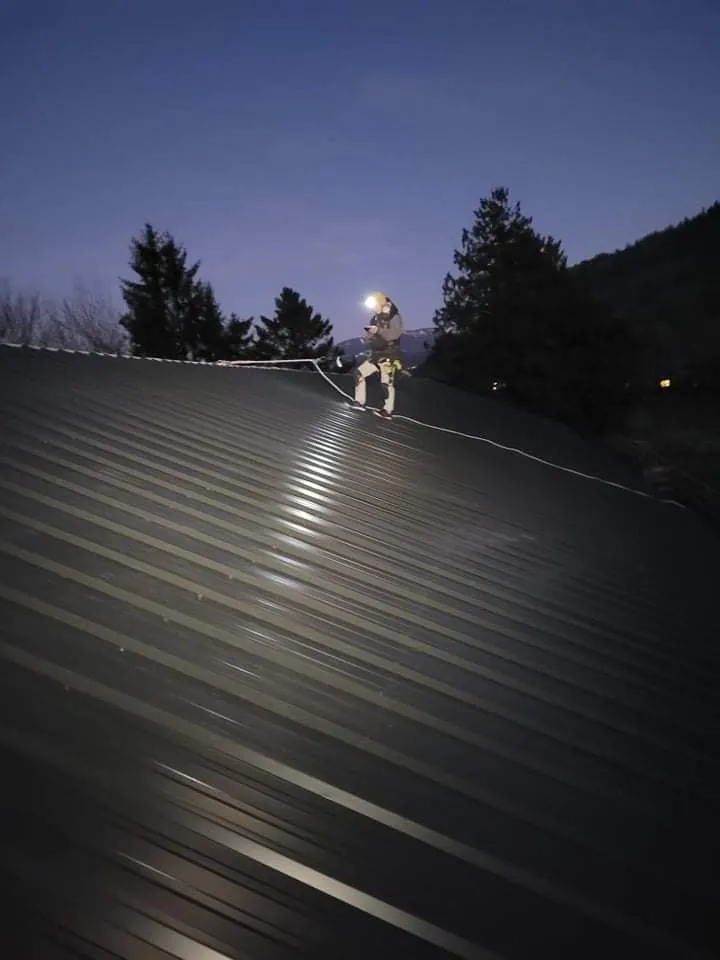
- Full fall arrest systems are required -- harness, lanyard, and roof anchor rated for your weight plus tools
Why Metal Roofing Suits the Fraser Valley
The Fraser Valley receives between 1,500 and 2,000 millimetres of annual rainfall depending on location. Harrison Hot Springs and Agassiz sit in one of the wettest corridors in southern BC, while Chilliwack and Abbotsford still see far more rain than the national average. Metal roofing handles this relentless moisture better than almost any other material. Water sheets off a metal surface immediately. There are no granules to erode, no organic material to grow moss, and no shingle tabs to lift in the wind-driven rain that characterizes Fraser Valley storms from October through April.
Beyond residential homes, the Fraser Valley is agricultural country. Barns, equipment sheds, hay storage buildings, and livestock facilities across Agassiz, Rosedale, Chilliwack, and the Harrison corridor all rely on metal roofing. The panel systems used on these buildings differ from residential standing seam, and understanding which system fits which structure is critical to getting the installation right.
The Three Metal Roofing Systems We Install
1. Standing Seam (Concealed Fastener)
Standing seam is the premium metal roofing option for residential homes. Panels interlock vertically and attach to the deck with concealed clips rather than screws through the panel surface. Because no fastener penetrates the weather surface, standing seam eliminates the most common failure point in metal roofing: screw holes that eventually leak as washers degrade.
Panels are typically roll-formed on-site from coil stock using a portable panel machine. This allows custom lengths from eave to ridge with zero horizontal seams. On a typical Fraser Valley ranch-style home, each panel runs 20 to 30 feet uninterrupted, creating clean vertical lines and a completely watertight surface.
Best for: Residential homes, custom builds, properties where long-term value and appearance matter. Typical cost: $18 to $28 per square foot installed.
2. Corrugated (Exposed Fastener, Through-Rib)
Corrugated panels fasten through the raised ribs with painted screws and rubber EPDM washers. This is the workhorse system for agricultural buildings across the Fraser Valley. It installs faster than standing seam, costs significantly less, and provides reliable weather protection for decades when the fasteners are properly torqued and the washers are inspected periodically.
On barns and larger agricultural structures, corrugated panels install over purlins -- horizontal framing members spaced 24 to 48 inches apart depending on the panel gauge and wind load requirements. No sheathing or underlayment is needed when installing over purlins on uninsulated buildings, which keeps costs down for farm structures.
Best for: Barns, equipment sheds, workshops, carports, and agricultural buildings. Typical cost: $8 to $14 per square foot installed.
3. Exposed-Fastener Flat Panels (Board and Batten Profile)
Flat panels with vertical batten caps create a traditional look that works well on both residential and agricultural buildings. Fasteners are concealed under the batten cap, offering a middle ground between standing seam and corrugated in terms of weather resistance and cost. This profile is common on heritage-style homes and renovated barns throughout the Harrison and Agassiz corridors.
Best for: Heritage restorations, mixed-use buildings, properties wanting a traditional aesthetic. Typical cost: $12 to $20 per square foot installed.
How the Installation Process Works
Phase 1: Structural Assessment
Before ordering a single panel, the roof structure needs to be verified. Metal roofing is lighter than asphalt shingles -- roughly 1.5 pounds per square foot versus 2.5 to 4 pounds -- so the existing framing almost always supports the load. The assessment focuses on different concerns:
- Sheathing condition: Soft spots, delaminated OSB, or rot from previous leaks must be cut out and replaced. Metal panels telegraph every imperfection in the deck below.
- Rafter or truss spacing: Standard 16-inch or 24-inch centres work for most panel systems. Wider spacing on older buildings may need supplemental purlins.
- Ventilation pathways: Metal roofs run hotter than asphalt in summer and colder in winter. Adequate soffit-to-ridge airflow prevents condensation from forming on the underside of panels. In the Fraser Valley's humid climate, this is especially important.
- Purlin condition on agricultural buildings: Old barns often have twisted, sagging, or undersized purlins. Replacing them costs far less than dealing with panel alignment problems after the roof is on.
Phase 2: Weather Barrier Installation
On residential installations over solid sheathing, the weather barrier system starts with ice and water shield membrane at the eaves. Code requires 36 inches of coverage, but in the Fraser Valley we install a minimum of 72 inches up from the eave edge. This extra coverage protects against ice dam melt and the wind-driven rain that pushes water uphill under panels during winter storms.
Over the rest of the deck, high-temperature synthetic underlayment goes down in horizontal courses with 6-inch side laps and 12-inch end laps. Standard felt underlayment cannot handle the heat that builds under metal panels during summer. On south-facing roof planes in Agassiz or Chilliwack, panel surface temperatures can exceed 65 degrees Celsius -- enough to melt standard felt paper into a sticky mess that bonds to the panel undersides.
Agricultural buildings installed over open purlins skip the underlayment entirely. The air gap between the panel and the interior acts as drainage and drying, which is appropriate for uninsulated structures where some minor condensation drip is acceptable.
Phase 3: Perimeter Trim and Flashing
Every piece of perimeter trim -- eave drip edge, rake trim, valley flashing -- goes on before the first panel. This is where our boilermaker training pays off. Each trim piece is fabricated using a metal brake, bent to custom angles that match the specific roof pitch and panel profile. Factory-made trim only comes in standard angles (typically 4:12 and 6:12), but Fraser Valley roof pitches vary widely, especially on older homes and agricultural buildings.
All trim laps seal with butyl tape. We do not use silicone or polyurethane sealant on metal-to-metal joints. Butyl stays flexible through thermal cycling and adheres reliably to painted metal surfaces for decades. It is the only sealant recommended by every major metal panel manufacturer.
Phase 4: Panel Layout and Attachment
Panel layout planning prevents the most visible quality issue in metal roofing: a narrow, awkward panel at one rake. We measure the roof width, divide by the panel coverage width, and adjust the starting position so both rakes end with panels at least half their full width.
For standing seam, concealed clips attach to the deck at 12- to 24-inch intervals along chalk lines marking each seam location. The clips grip the panel's lock leg and fasten through to the sheathing with screws. Panels engage the clips by sliding the female lock over the clip and the adjacent panel's male lock, then the seam is mechanically closed with an electric seaming tool.
For corrugated panels on agricultural buildings, the process is faster. Panels lay over purlins and fasten through the ribs with self-drilling screws and EPDM washers. The screws must penetrate the purlin by at least one inch. Proper torque matters: too tight crushes the washer and cracks it within a few years; too loose allows water past the washer and vibration backing the screw out.
Phase 5: Penetration Flashing
Plumbing vents, exhaust stacks, chimneys, and any other roof penetrations get metal-compatible pipe boots or custom flashing. Chimneys require a full four-piece flashing system: base flashing, step flashing along each side, saddle (cricket) at the upslope face, and counter flashing embedded in the mortar or cladding.
Every penetration flashing gets sealed with butyl tape underneath the flange and metal-to-metal sealant at the panel interface. In a climate with as much driving rain as the Fraser Valley receives, penetrations are the number one source of leaks on metal roofs, so we over-engineer every one of them.
Phase 6: Ridge, Hip & Final Closure
The ridge cap is the last major component. We install ventilated ridge caps on all residential metal roofs to maintain attic airflow. Foam closure strips shaped to match the panel profile seal the gap between the panel ends and the ridge cap, keeping out rain, snow, insects, and birds while allowing warm air to exhaust from the attic.
On hip roofs, hip caps cover the diagonal intersection of two roof planes. These require precise angle cuts on every panel end and custom-bent hip trim that follows the compound angle of the hip line. Getting these joints watertight demands metalwork skill that goes beyond standard roofing knowledge.
Thermal Expansion: The Detail Most Installers Get Wrong
Metal expands when hot and contracts when cold. A 12-metre standing seam panel on a south-facing roof in Chilliwack can change length by 12 to 15 millimetres between a January frost and a July afternoon. If the panels are rigidly fastened at both ends, this expansion buckles the panel surface, creating the wavy distortion called "oil canning" that ruins the appearance of an otherwise well-built roof.
Standing seam clips solve this by allowing the panel to slide within the clip as it expands and contracts. The panel is fixed only at the eave and floats at the ridge. For corrugated systems, elongated screw holes in the panels allow limited movement. But many installers drill tight holes and drive screws dead centre, locking the panel in place. Within two summers, those panels show visible distortion.
Understanding thermal behaviour in metals is second nature to anyone with boilermaker training. Kory and Johnny spent years in the oil sands working with pressurized steel systems that expand and contract under extreme temperature swings. That industrial experience translates directly to knowing how to fasten a metal roof so it stays flat and leak-free for decades.
Galvanic Corrosion: Mixing Metals Is Not an Option
When two dissimilar metals touch in the presence of moisture, the less noble metal corrodes. This is galvanic corrosion, and in the Fraser Valley's wet climate, it happens fast. Aluminum panels fastened with plain steel screws will show corrosion rings around every fastener within three to five years. Copper flashing touching galvanized steel will eat through the steel in under a decade.
Every fastener, clip, flashing piece, and trim component must be compatible with the panel metal. For steel panels, stainless steel fasteners with painted heads are standard. For aluminum panels, aluminum or stainless steel fasteners are required. We never mix metals, and we verify compatibility on every component before it goes on the roof. This is basic metallurgy that should be non-negotiable on any metal roof installation.

Metal Roofing on Fraser Valley Agricultural Buildings
Agriculture is the backbone of the Fraser Valley. From Agassiz dairy farms to Chilliwack poultry operations to Rosedale hay producers, metal-clad agricultural buildings are everywhere. These structures have different requirements than residential metal roofs:
- Longer panel spans: Agricultural buildings often have purlin spacing of 48 inches or more, requiring heavier gauge panels (24-gauge or 22-gauge versus the 26-gauge used residentially).
- Interior environment: Livestock buildings produce humidity, ammonia, and condensation that attacks panel undersides. Properly specified panels for agricultural use have enhanced corrosion-resistant coatings on the interior face.
- Ventilation design: Barn ridge vents, cupola ventilators, and sidewall openings must integrate with the metal roof system without creating leak points.
- Snow load: Agricultural buildings in the Harrison corridor and toward Hope see heavier snow loads than those in Abbotsford. Panel gauge and purlin spacing must account for the local snow load requirements under the BC Building Code.
- Cost sensitivity: Farm buildings prioritize function over appearance. Corrugated panels in standard colours (charcoal, forest green, barn red) installed efficiently keep costs proportional to the building's purpose.
We have completed metal roof installations on dairy barns, hay sheds, equipment storage buildings, and riding arenas across the Fraser Valley. Each type has its own ventilation, condensation, and structural considerations that generic roofing contractors often overlook.
Five Mistakes That Ruin a Metal Roof
1. Skipping the Structural Check on Re-Roofs
When replacing an old shake or shingle roof with metal, the existing sheathing may have hidden rot under layers of old material. Installing new metal over compromised decking creates soft spots, fastener pull-through, and panel deflection that shows through the finished surface. Always strip to bare deck and inspect before committing to metal.
2. Using the Wrong Underlayment
Standard 15-pound felt paper melts under metal panels in summer heat. We have torn off metal roofs installed by other contractors and found the felt fused to the panel undersides in a tar-like layer. High-temperature synthetic underlayment rated for metal roofing costs a few hundred dollars more on a typical house. Skipping it is a false economy.
3. Over-Driving Exposed Fasteners
Impact drivers make it easy to crush EPDM washers. A properly seated screw compresses the washer just enough to form a water seal. Over-driven screws crack the washer, and within a few years each one becomes a leak point. On a barn with 3,000 screws, that means 3,000 potential leaks. We set torque limiters and check washer compression visually on every fastener.
4. Ignoring Thermal Expansion
Panels locked rigidly at both ends buckle and oil-can. This is covered in every manufacturer's installation manual, yet we see it on roofs throughout the valley. The fix after the fact is extremely expensive -- essentially a full re-installation.
5. Poor Flashing at Wall Transitions
Where a metal roof meets a vertical wall (dormers, second-storey walls, parapets), the flashing must extend at least 4 inches up the wall surface and tuck behind the wall cladding. Surface-mounted flashing sealed only with caulk will fail within a few years. Proper kick-out flashing at the bottom of wall-to-roof transitions prevents water from running behind the siding and into the wall cavity.
What a Red Seal Boilermaker Brings to Metal Roofing
Before founding Fraser Roofing Ltd. in 2026, Kory and Johnny Peters earned their Red Seal Boilermaker certifications and spent years in the oil sands working with industrial steel systems. Boilermaker training covers welding, metal fabrication, blueprint reading, thermal expansion calculations, and material science at a depth that no standard roofing certification approaches.
That background shows up in the details of every metal roof we install. Custom trim fabricated to exact roof angles rather than forced to fit from standard stock. Fastener patterns calculated for actual wind uplift zones rather than just following a generic spacing chart. Dissimilar metal isolation at every transition. Expansion allowances built into every panel attachment. Over 500 roofs completed since 2026, including residential standing seam, agricultural corrugated, and mixed-use buildings across the Fraser Valley from Hope to Abbotsford.
Frequently Asked Questions
How long does a metal roof last in the Fraser Valley?
Standing seam lasts 40 to 60 years with minimal maintenance. Corrugated with exposed fasteners lasts 25 to 40 years, with fastener washer replacement typically needed around year 15 to 20. The Fraser Valley's consistent rainfall actually helps by keeping surfaces clean of debris and pollen that can trap moisture against the panel surface in drier climates.
Can I install metal over existing shingles?
We rarely recommend it in our climate. Trapped moisture between the shingle layer and the metal panel accelerates underside corrosion. A full tear-off with new underlayment delivers a significantly longer-lasting result. The one exception is agricultural buildings where purlins are installed over the old roof, creating a ventilated air gap that allows moisture to escape.
What is the difference between standing seam and corrugated?
Standing seam hides all fasteners beneath interlocking seams -- no screw penetrates the panel surface. Corrugated uses exposed screws through the panel ribs. Standing seam is more watertight and longer-lasting but costs 30 to 50 percent more. Corrugated is the standard choice for agricultural buildings where cost efficiency and ease of repair outweigh aesthetics.
Is a metal roof noisy during rain?
On a residential home with solid sheathing, underlayment, and insulated attic space, a metal roof is no louder than asphalt during rain. The "tin roof in a rainstorm" reputation comes from uninsulated agricultural buildings where panels sit directly on open purlins with nothing to dampen sound.
Why hire boilermaker-trained roofers for metal installation?
Metal roofing is metalwork. Thermal expansion, galvanic corrosion, proper fastener torque, custom brake fabrication, and reading panel manufacturer specifications are all skills rooted in the metal trades. Kory and Johnny's Red Seal Boilermaker certifications mean they bring industrial-grade precision to every residential and agricultural metal roof in the Fraser Valley.
Need Expert Help With Your Roof?
Kory & Johnny have completed 500+ roofs across the Fraser Valley since 2026. Free inspections, honest estimates, no pressure.
(778) 860-4747Serving Hope, Agassiz, Chilliwack, Rosedale, Abbotsford & the entire Fraser Valley
Fraser Roofing Ltd. installs standing seam, corrugated, and exposed-fastener metal roofing across the Fraser Valley -- from residential homes in Chilliwack and Agassiz to agricultural barns in Hope and Harrison. Kory and Johnny Peters bring Red Seal Boilermaker precision to every panel, fastener, and flashing detail. Over 500 roofs completed since 2026.
Ready for a metal roof built by tradesmen who understand metal? Call (778) 860-4747 for a free on-site assessment.