Fraser Valley Climate Science: What Your Roof Is Really Up Against
River fog, atmospheric rivers, relentless moss, and outflow winds — the forces that wear down roofs between Hope and Abbotsford
Last updated: February 2026
Living in the Fraser Valley means living in one of the most punishing roofing climates anywhere in North America. We are not talking about a single weather extreme — we are talking about a combination of forces that hit roofs from every angle, all year long. After installing and repairing over 500 roofs across this valley since 2026, we have seen exactly what this climate does to roofing systems, and the science behind it explains a lot about why certain roofs fail years ahead of schedule.
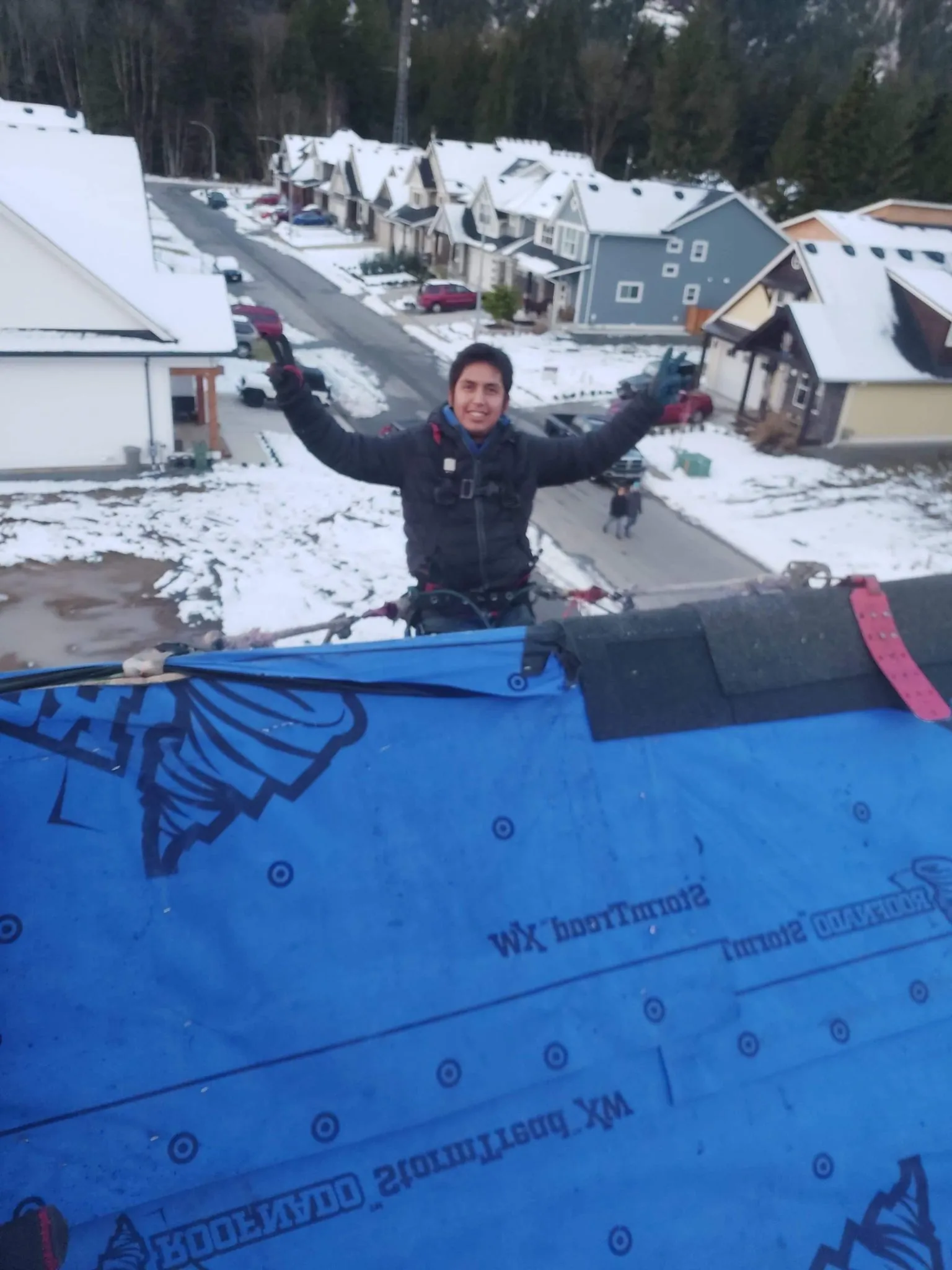
The Valley Funnel: Why We Get Hammered With Rain
The Fraser Valley is shaped like a giant funnel. The Coast Mountains to the north and the Cascade Range to the south channel Pacific moisture directly through our corridor. When warm, saturated air from the ocean hits this terrain, it has nowhere to go but up — and as it rises, it cools and dumps water. That is orographic lift, and it is the reason Agassiz receives roughly 1,800 mm of rain per year while Calgary, at roughly the same latitude, gets about 420 mm.
The numbers across the valley tell the story clearly:
- Harrison Hot Springs — 2,000+ mm per year, the wettest part of our service area
- Agassiz — approximately 1,800 mm, our home base and one of the rainiest communities in the valley
- Hope — around 1,700 mm, where the valley narrows and moisture stacks up against the mountains
- Chilliwack — approximately 1,650 mm, slightly drier but still far above the national average
- Abbotsford — around 1,550 mm, benefiting from some rain shadow but still soaked by Pacific standards
For context, that is roughly two to four times what most Canadian cities receive annually. And the rain is not spread evenly — October through April delivers the bulk of it, often in stretches of 20 or more consecutive rain days per month.
River Fog: The Silent Soaker
Something rarely discussed outside the valley is river fog. The Fraser River and the Harrison River both generate dense fog that settles over communities like Agassiz, Harrison, Rosedale, and Chilliwack — sometimes for days at a time between October and February. This fog keeps relative humidity above 90% and prevents roof surfaces from ever fully drying out.
From a roofing perspective, river fog is insidious. It does not show up on rain gauges, so it is easy to underestimate. But a roof deck that stays damp for weeks at a time degrades faster than one that gets soaked and dries. Constant moisture accelerates hydrolysis — the process where water molecules break chemical bonds in asphalt compounds. It also creates ideal germination conditions for moss spores, which is why moss growth in the valley often begins on the side of a roof closest to the river, not necessarily the shadiest side.
Atmospheric Rivers: When the Sky Opens
Most people in the Fraser Valley became familiar with the term "atmospheric river" after November 2021, when catastrophic flooding shut down highways and destroyed homes across the region. But atmospheric rivers — sometimes called a Pineapple Express when they originate near Hawaii — have always been part of our weather. What is changing is their intensity.
A typical atmospheric river event drops 50 to 150 mm of rain in 24 to 48 hours. The 2021 event exceeded 200 mm in parts of the valley. These events stress roofs in ways that everyday rain does not:
- Volume overwhelms drainage — gutters back up, water pools on low-slope sections, and any gap in flashing or sealant becomes an entry point
- Wind-driven rain changes the angle of attack — water that normally flows down the slope gets pushed horizontally, finding its way under shingle tabs and into joints that are dry in normal conditions
- Extended duration prevents recovery — a 48-hour downpour keeps every component saturated, so capillary action has time to pull water deep into the roof assembly
We see the aftermath of these events every year. A roof that was "getting by" with minor wear suddenly develops leaks in three places after a single atmospheric river. The storm did not create the vulnerabilities — it exposed them.
Freeze-Thaw Cycling: Cracking Things Open
The Fraser Valley does not get the sustained deep cold of the prairies, but what we get is arguably worse for roofing materials: constant cycling between freezing and thawing. Between November and March, daytime temperatures often climb above zero while nights drop to minus 5 or minus 10 Celsius. A typical valley winter produces 30 to 50 of these freeze-thaw cycles.
Each cycle matters because water expands by 9% when it freezes. That expansion exerts tremendous force — enough to split rock, and more than enough to widen a hairline crack in a sealant bead or push a nail slightly outward from the deck. After 40 cycles in a single winter, those micro-movements add up. Fasteners loosen. Flashing joints open. Shingle edges lift. Each crack gets a little wider, each gap lets in a little more water, and the cycle accelerates.
The worst damage happens at the eaves, where ice dams form. Heat escaping from the attic melts snow on the upper roof. That meltwater flows down the slope until it reaches the eave overhang, where there is no heat from below. The water refreezes, forming a ridge of ice that traps subsequent meltwater behind it. That trapped water has nowhere to go except under the shingles and into the roof deck.
This is why we install ice and water shield membrane 6 feet up from the eave edge on every roof — double the code minimum. In our climate, the code minimum is not enough.

Moss and Algae: Biological Assault
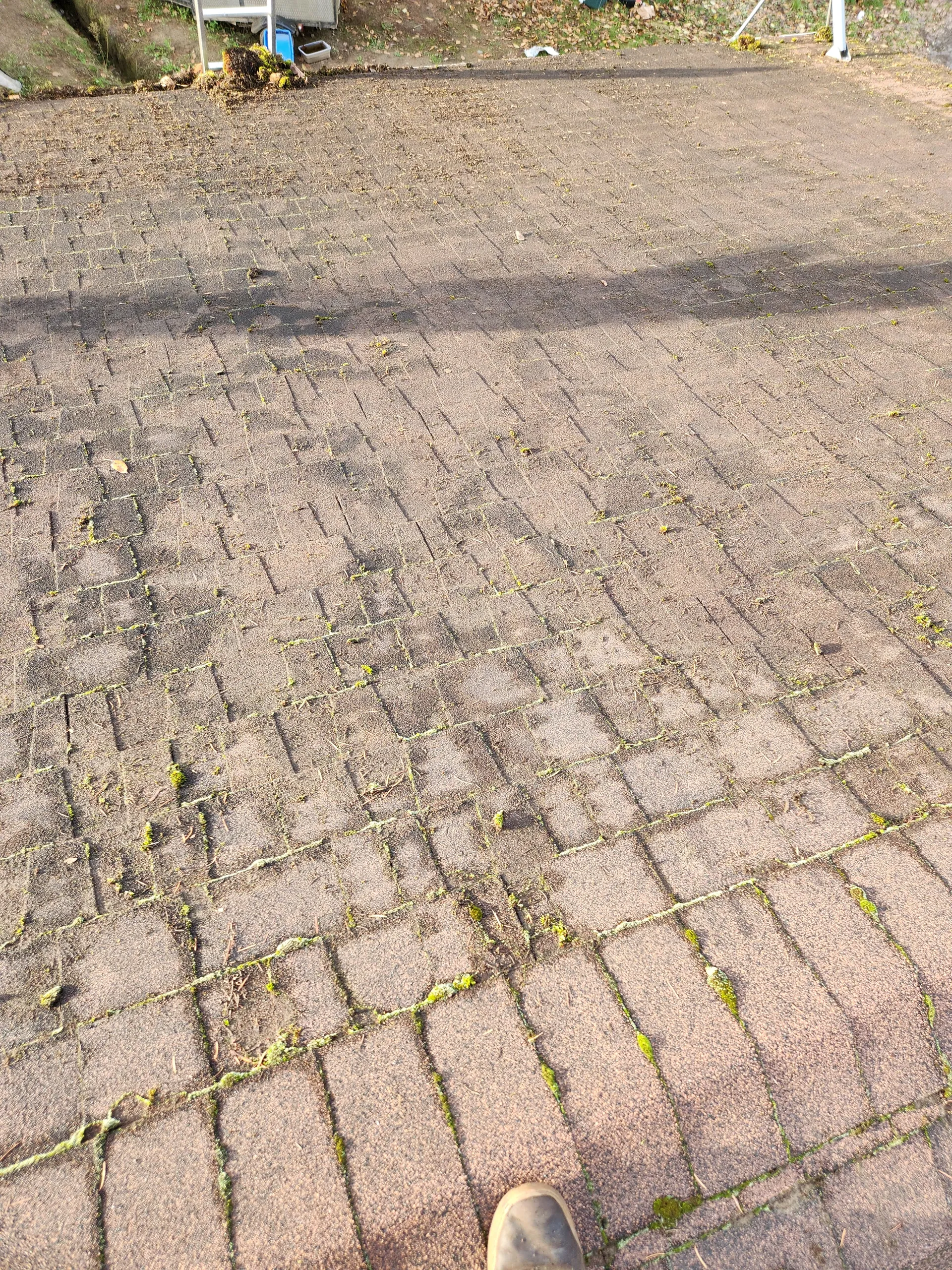
If you live anywhere from Hope to Abbotsford, you have seen green roofs — and not the intentional kind. Moss grows on Fraser Valley roofs faster than almost anywhere else in Canada because our climate provides the perfect combination: persistent moisture, mild temperatures, acidic rainfall, and shade from surrounding trees.
Moss is not just cosmetic. It causes structural damage through a specific process:
- Spore colonization — wind-carried spores land on the rough surface of asphalt shingles and lodge in the granule texture
- Rhizoid penetration — root-like structures called rhizoids grow into the shingle surface, literally anchoring the moss into the material
- Moisture retention — a mature moss colony can hold up to 10 times its own weight in water, keeping the shingle surface permanently saturated
- Edge infiltration — as moss colonies grow, they spread under shingle edges and lift them, creating pathways for wind-driven rain to enter
- Accelerated degradation — the constant moisture against the shingle surface speeds up asphalt breakdown, reducing the shingle's effective lifespan by years
Algae — specifically a cyanobacterium called Gloeocapsa magma — causes the dark streaks you see on lighter-coloured shingles throughout the valley. It feeds on limestone filler used in shingle manufacturing. While less structurally damaging than moss, algae holds moisture against the shingle surface and affects curb appeal significantly.
For our climate, we recommend AR-rated (algae-resistant) shingles as a baseline. For heavily shaded properties near rivers, zinc strip installation along the ridge provides ongoing moss prevention by releasing zinc particles during rainfall.
Outflow Winds: Cold Blasts From the Interior
Most people think of rain as the primary roofing threat in the Fraser Valley, but outflow winds cause some of the most dramatic damage we see. These events occur when cold, dense air masses build up in the BC interior and spill westward through mountain passes and down into the valley. The terrain acts like a nozzle, accelerating the wind as it funnels through gaps in the mountains.
Outflow wind events typically produce sustained winds of 60 to 80 km/h with gusts reaching 100 to 120 km/h. They come from the east — the opposite direction of our prevailing westerly winds — which means they attack the side of the roof that normally sits in the lee. Shingles and flashing that were installed and sealed for westerly wind exposure suddenly face uplift forces from the wrong direction.
Wind damage follows the Bernoulli principle: fast-moving air across the roof surface creates low pressure above it, while still air inside the attic pushes up from below. The pressure difference generates uplift force. The most vulnerable areas are edges, corners, and ridge lines where wind accelerates around geometry changes. A shingle with a slightly lifted edge or a weak sealant bond can get peeled back in seconds.
This is exactly why we use a 6-nail fastening pattern — 50% more nails per shingle than the standard 4-nail pattern. It costs a bit more in materials and labour, but in a valley that gets hit by outflow events two to five times per winter, that extra holding power pays for itself the first time a cold blast rolls through.
Humidity and Condensation: The Enemy You Cannot See
Fraser Valley relative humidity averages 70 to 75% year-round, climbing above 85% for much of the wet season. Inside a home, activities like cooking, showering, and even breathing add moisture to the air. That warm, humid air rises into the attic space, where it meets the cold underside of the roof deck.
When the roof deck surface temperature drops below the dew point of the attic air, water condenses directly onto the wood. In the Fraser Valley, this happens frequently from November through March. Without adequate ventilation, that condensation accumulates. We have opened up attic spaces and found the underside of the sheathing dripping wet, with no leak anywhere on the exterior — the water was coming from inside.
Prolonged condensation causes deck rot, insulation failure, and mold growth. It can also contribute to ice dam formation by creating warm spots on the roof surface. Proper ventilation — balanced intake at the soffits and exhaust at the ridge — moves humid air out of the attic before it can condense. For Fraser Valley homes, we calculate ventilation requirements based on our actual humidity levels, not generic national guidelines that assume drier climates.
Climate Trends: It Is Getting Worse
Environment Canada data shows clear trends in the Fraser Valley over the past several decades:
- Average temperatures have risen approximately 1.5 degrees Celsius since 1950 — sounds small, but it shifts precipitation patterns and extends biological growing seasons
- Extreme heat events are increasing — the 2021 heat dome pushed Lytton to 49.6 degrees Celsius, and valley temperatures reached the low 40s
- Atmospheric rivers are intensifying — the same events now carry more moisture and drop it more rapidly
- Snow patterns are shifting — less total snow, but more variable, with heavier wet snow events that load roofs more than dry powder
- The growing season is longer — moss and algae have more warm, moist months to colonize and spread
For roofing, these trends mean that materials and techniques that were adequate 20 years ago may not hold up for the expected lifespan of a new roof installed today. Higher wind ratings, better drainage capacity, and more robust waterproofing membranes are not over-engineering — they are adapting to the reality of where the climate is heading.
How We Build for This Climate
Understanding the science is only useful if it changes how you build. At Fraser Roofing Ltd., every decision we make on a roof ties back to what we know about Fraser Valley weather:
- Synthetic underlayment instead of felt paper — felt paper absorbs water and degrades quickly in our moisture levels. Synthetic underlayment sheds water, resists tearing, and holds up under prolonged exposure during installation
- Extended ice and water shield membrane — 6 feet up from the eave edge, covering valleys fully, and wrapping all penetrations. Our freeze-thaw cycle count demands more protection than code minimum
- 6-nail fastening pattern on every shingle — outflow wind events justify the extra holding power, and the cost difference per square is minimal compared to the risk of wind damage
- Ventilation calculated for our humidity — balanced ridge-and-soffit airflow sized for 80%+ humidity, not the 50-60% assumed in national guidelines
- Drip edge on every eave and rake — directs water cleanly into the gutter system and prevents capillary action from pulling water back under the deck edge
Kory and Johnny grew up in this valley. They have worked on roofs in atmospheric river downpours, in outflow wind events that made it hard to stand, and in river fog so thick you couldn't see the ridge from the eave. That experience, combined with the technical knowledge they brought from their years as Red Seal Boilermakers in the oil sands, shapes every roof they build. The climate is not going to get easier on roofs. The answer is building smarter.
Need Expert Help With Your Roof?
Kory & Johnny have completed 500+ roofs across the Fraser Valley since 2026. Free inspections, honest estimates, no pressure.
(778) 860-4747Serving Hope, Agassiz, Chilliwack, Rosedale, Abbotsford & the entire Fraser Valley
Questions about how Fraser Valley weather affects your roof? Call (778) 860-4747 for a free inspection from Fraser Roofing Ltd. in Agassiz, BC.
Frequently Asked Questions
Why does the Fraser Valley get so much rain compared to other parts of Canada?▾
The Fraser Valley sits in a funnel between the Coast Mountains and the Cascade Range. Moisture-laden air from the Pacific gets squeezed through this corridor, dumping 1,500 to 2,000+ mm of precipitation annually. Agassiz averages around 1,800 mm per year — roughly double what Toronto receives. The valley floor also traps river fog from the Fraser and Harrison rivers, keeping surfaces damp even when it is not actively raining.
How many freeze-thaw cycles does a Fraser Valley roof experience each winter?▾
Most Fraser Valley locations experience 30 to 50 freeze-thaw cycles between November and March. Water trapped in small cracks expands by 9% when it freezes, widening those gaps each cycle. Over a single winter, this repeated expansion can turn a hairline crack in flashing or a lifted shingle edge into a significant leak path. Proper ice and water shield membrane along eaves is essential protection.
What causes moss to grow so fast on Fraser Valley roofs?▾
Moss needs three things to thrive: moisture, mild temperatures, and shade. The Fraser Valley delivers all three for roughly eight months of the year. With humidity regularly above 80% from October through April and temperatures rarely dropping below minus 10 Celsius for extended periods, moss spores germinate quickly and colonies can spread 1 to 2 centimetres per year. North-facing slopes and areas shaded by trees are especially vulnerable.
Are atmospheric rivers getting worse in the Fraser Valley?▾
Yes. Environment Canada data shows atmospheric river events are increasing in both frequency and intensity. The November 2021 atmospheric river that caused catastrophic flooding throughout the Fraser Valley dropped over 200 mm in 48 hours in some areas. Climate projections suggest these extreme rainfall events will become 10 to 30% more intense by 2050, making proper roof drainage and waterproofing more critical than ever.
What roofing practices does Fraser Roofing Ltd. use specifically for Fraser Valley weather?▾
We use a four-part approach designed for this climate: synthetic underlayment rated for prolonged moisture exposure instead of felt paper; extended ice and water shield membrane running 6 feet up from the eave rather than the code minimum 3 feet; a 6-nail fastening pattern per shingle for wind resistance during outflow events; and balanced ridge-to-soffit ventilation sized for the high humidity levels common in the valley. Every roof we build accounts for our specific weather patterns.