The first winter Johnny and I ran Fraser Roofing Ltd. out of Agassiz, we got a panicked call from a homeowner up near the Hope Slide memorial. She said her bedroom door would not close anymore. By the time we drove out and got eyes on the place, the ridge beam was bowing under nearly a metre of wet snow. That call changed how we think about every roof east of Chilliwack. Last updated: February 2026.
Why the Fraser Valley Is Not One Snow Zone
People in Abbotsford sometimes laugh when we talk about snow load. Fair enough, they might see a week of slush all winter. But drive 90 minutes east toward Hope, climb a few hundred metres of elevation around Harrison or Agassiz, and the picture changes completely. The Cascade Range funnels Pacific moisture upward, wringing it out as heavy, wet snow that locals call "Cascade concrete." A single overnight dump can deposit 40 centimetres of this stuff, and it weighs roughly seven times more per foot than the fluffy powder skiers love.
- Abbotsford (30 m elevation): ~1.2 kPa ground snow load, rarely accumulates past 15 cm
- Chilliwack (10-60 m elevation): ~1.5 kPa, moderate accumulation with quick melt cycles
- Agassiz and Harrison (15-150 m elevation): ~1.6-1.8 kPa, lake-effect snow adds unpredictable dumps
- Hope and eastern corridor (40-400+ m elevation): 1.9 kPa minimum, with microclimates pushing well beyond code
- Mountain-adjacent properties above 200 m can see double the accumulation of valley-floor neighbours just kilometres away
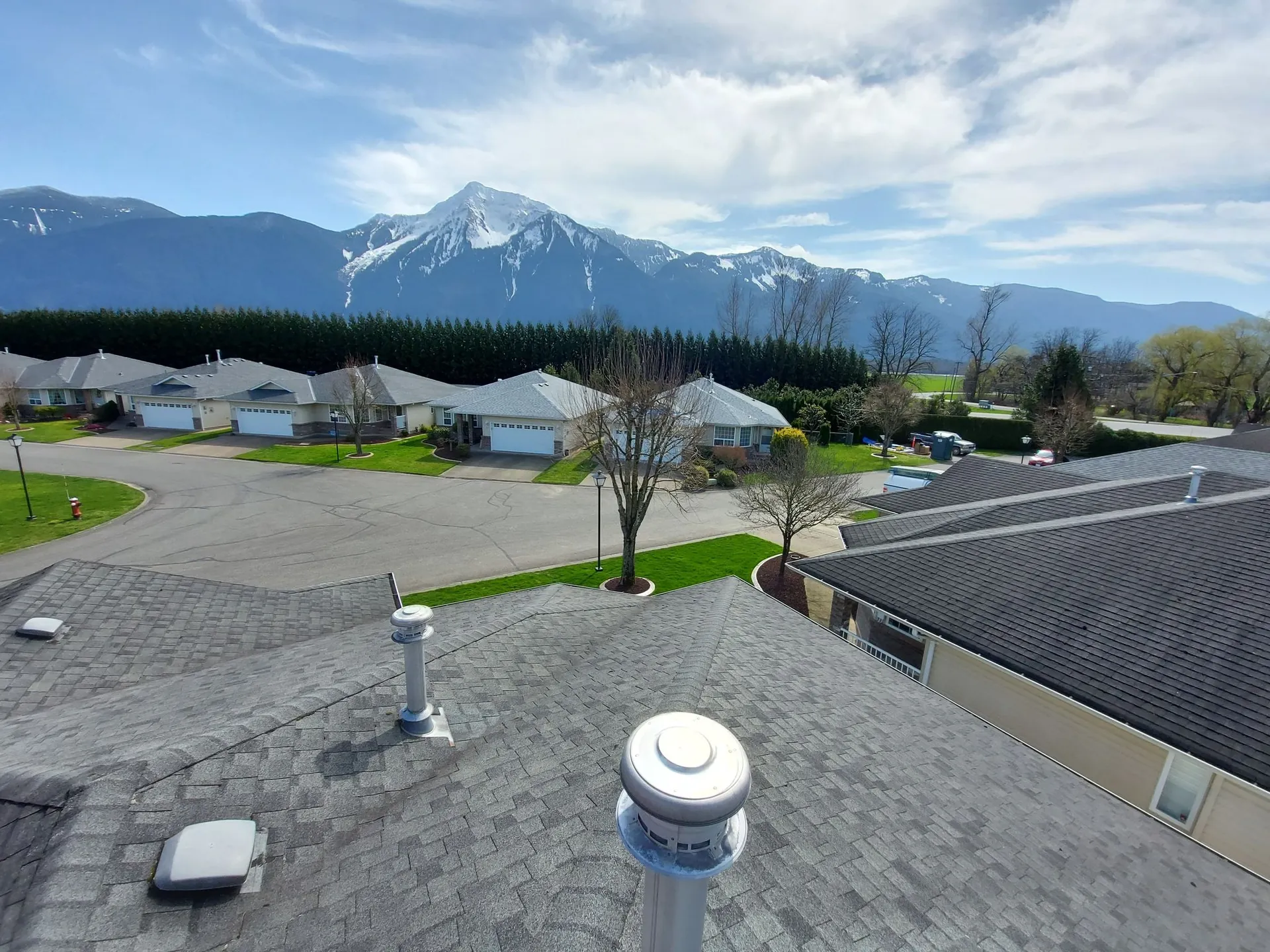
BC Building Code sets minimum ground snow load ratings by location, but these are minimums. Johnny and I have personally seen properties near Hope Pass and upper Agassiz receive snow loads that exceeded the code baseline by 30-40% during the 2022-23 winter. Site-specific conditions always matter more than a map pin.
A Boilermaker's Perspective on Structural Load
Before roofing, Johnny and I spent a decade each as Red Seal Journeyman Boilermakers in the Alberta oil sands. We fabricated and installed pressure vessels rated for thousands of PSI. That background rewired how we look at a roof truss. To us, a roof is not just shingles and plywood. It is a structural system with a load rating, and exceeding that rating has consequences every bit as real as over-pressurizing a boiler. When we inspect a roof for snow readiness, we are checking rafter spans, connection hardware, collar ties, and bearing points the same way we would check weld integrity on a vessel.
Reading the Warning Signs Before Failure
Roofs rarely collapse without warning. The structure talks to you first, and the trick is knowing what to listen for. After five winters of emergency calls across the Fraser Valley, here is the progression we see most often:
- Stage 1: Interior doors start sticking or refusing to latch, because the frame is deflecting under load
- Stage 2: Hairline cracks appear in drywall near ceiling corners and at the tops of interior walls
- Stage 3: You hear popping, cracking, or groaning from the attic space, especially at night when temperatures drop
- Stage 4: The roofline develops a visible sag when viewed from the street or driveway
- Stage 5: Windows bind in their frames and exterior trim gaps widen unevenly
If you notice Stage 1 or 2 symptoms during or after heavy snowfall, do not wait. Evacuate the top floor and call immediately. We have seen homeowners write off a sticky door as "the house settling" and end up with a collapsed ceiling 48 hours later. Call Fraser Roofing Ltd. at (778) 860-4747 for emergency assessment.
How We Handle Snow Removal Safely
In the oil fields, we learned a simple rule: everything tied off, no exceptions. That same culture comes with us onto snow-covered roofs. Most homeowners should never set foot on a snowy roof, period. But there are safe ways to reduce load from ground level, and situations where professional removal is the only responsible option.
- From the ground: use a telescoping roof rake with a non-abrasive slide plate to pull snow off eave sections, working in 10-cm layers
- Clear both sides of the ridge evenly to avoid creating an unbalanced load that stresses one wall more than the other
- Leave about 5 cm of snow on the surface to protect shingles from the rake edge, especially on asphalt roofs
- Never throw salt, calcium chloride, or chemical de-icers onto a roof, as they degrade shingle adhesive strips and corrode metal flashing
- If accumulation exceeds 60 cm and ground-level raking cannot reach the upper sections, professional removal with fall protection is necessary
Why We Recommend Metal Roofing Above 150 Metres
Standing seam metal changes the snow equation entirely. The smooth surface allows snow sheets to slide off naturally once they reach a critical mass, so dangerous accumulation rarely happens in the first place. Johnny and I have documented side-by-side comparisons on neighbouring houses near Hope where the metal roof stayed clear while the shingle roof next door held 70 cm of compacted snow from the same storm. For any property above 150 metres elevation in the Fraser Valley, we push hard for standing seam with a minimum 4:12 pitch.
- Natural snow shedding eliminates the need for manual removal in most storms
- No moisture absorption means zero freeze-thaw cycle damage, which is the number one killer of asphalt roofs in mountain communities
- Snow guards can be added at entry points and walkways to control where snow slides off, preventing avalanche surprises at your front door
- Metal handles the thermal shock of rapid Fraser Valley temperature swings, from -15 C overnight to +5 C by afternoon, without cracking or delaminating
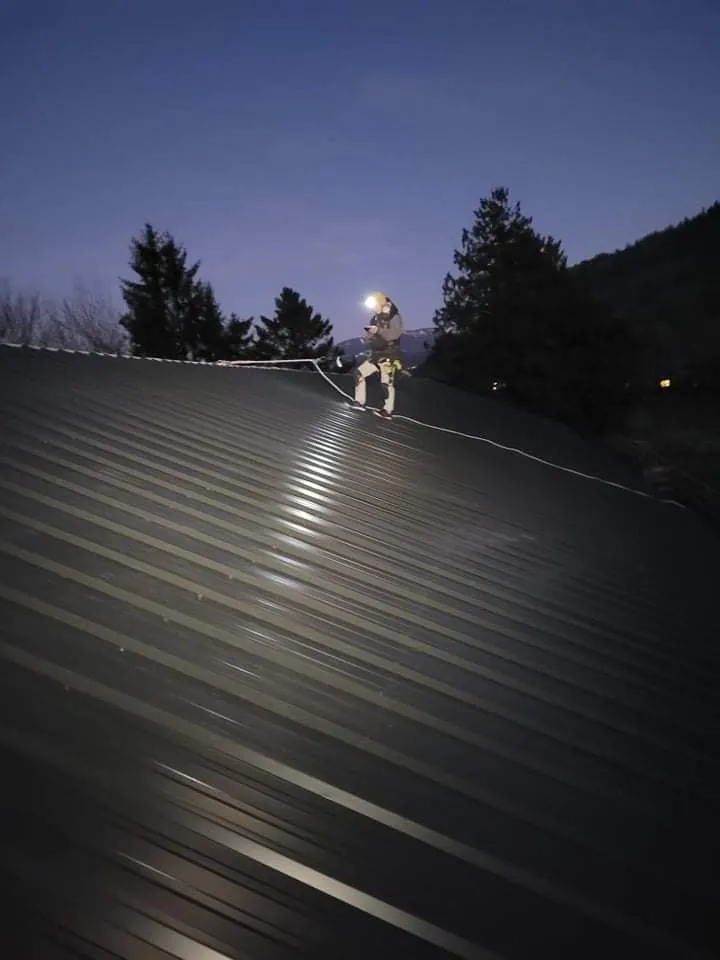
If you live in Hope, upper Agassiz, Harrison, or anywhere the mountains are close enough to touch, a standing seam metal roof is not a luxury. It is the most practical long-term investment you can make. Call us at (778) 860-4747 or email johnny@fraserroofing.ca for a free snow-readiness assessment of your property.
Preparing Your Roof Before Winter Hits
The best time to worry about snow load is September, not January. Every fall, Johnny and I run through a pre-winter checklist on our own homes and on every client roof we can get to before the first flakes fly. Here is what we look for:
- Inspect attic framing for existing cracks, splits, or insect damage that could weaken under load
- Verify that collar ties and rafter bracing are intact and properly fastened with structural hardware, not just toenailed
- Clean gutters and downspouts completely so meltwater drains freely instead of refreezing into ice dams
- Check that soffit and ridge ventilation is unobstructed, because warm attic air melts snow unevenly and creates ice dam conditions
- Trim back any tree branches within 3 metres of the roof that could break under snow weight and crash onto the structure
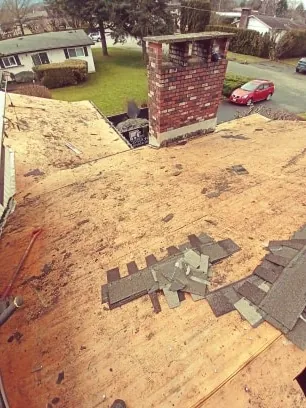
Fraser Roofing Ltd. offers a pre-winter inspection package every September and October specifically for mountain-adjacent properties in the Fraser Valley. One visit covers structural assessment, ventilation check, and a written report on your roof's snow readiness. Book early because our schedule fills fast once the rain starts.