I remember the first time I pulled shingles off a roof in Agassiz and the plywood underneath felt like wet cardboard. No storm damage. No visible leak. No missing shingles. Just years of Fraser Valley humidity doing what it does — quietly rotting a roof from the inside while the homeowner had no idea. That was early in my career, but after 500-plus roofs from Hope to Abbotsford, Johnny and I have seen that same scene play out dozens of times. The Fraser River pumps moisture into the air constantly, morning fog sits on rooftops until noon, and the relative humidity rarely dips below 80 percent from October through April. Most homeowners prepare for rain. Almost nobody prepares for humidity. That is the mistake this article is about.
What the Fraser River Does to Your Neighbourhood
The Fraser Valley is not just wet — it is humid in a way that most of BC is not. Drive over the Port Mann Bridge heading east and the air changes. By Chilliwack, morning fog blankets everything. By Agassiz, where we are based, the river is wide and slow and the mountains on both sides trap moisture in the valley floor like a bathtub. Harrison Hot Springs, Rosedale, Kent — these towns sit in the thickest part of that moisture band. Interior BC gets cold and dry. The coast gets rain that runs off. We get both rain and persistent fog that just sits there, soaking into everything.
This creates a specific problem for roofs that contractors from Vancouver or the Okanagan do not always understand. The damage is not from water running over the surface. It is from water vapour penetrating into materials that never fully dry out. Shingle adhesive strips lose their bond. Felt underlayment absorbs moisture and stays damp against the deck. Wood sheathing develops mould colonies you cannot see from outside. By the time a homeowner notices a problem — usually a musty attic smell or a ceiling stain — the damage is already thousands of dollars deep.
Environment Canada data shows the Fraser Valley averages over 80 percent relative humidity for roughly 200 days per year. Homes within 2 kilometres of the Fraser River experience even higher sustained humidity due to river fog, especially in the Agassiz-Harrison corridor where Fraser Roofing Ltd. is based.
Five Ways Humidity Destroys Roofs That Storms Do Not
When Johnny and I do inspections, we look for humidity damage patterns that are completely different from storm damage. Here is what 10 years of experience has taught us to check.
- Adhesive strip failure — Shingle tabs rely on a tar-based adhesive strip that bonds when heated by the sun. Persistent humidity prevents full curing and weakens the seal over time, making tabs lift in moderate winds that would not affect a dry-climate roof
- Underside condensation — Warm air from your house rises into the attic and hits the cold underside of the roof deck. In dry climates, that moisture dissipates. In the Fraser Valley, the ambient humidity is already so high that condensation pools on the plywood and never evaporates, rotting the deck from below
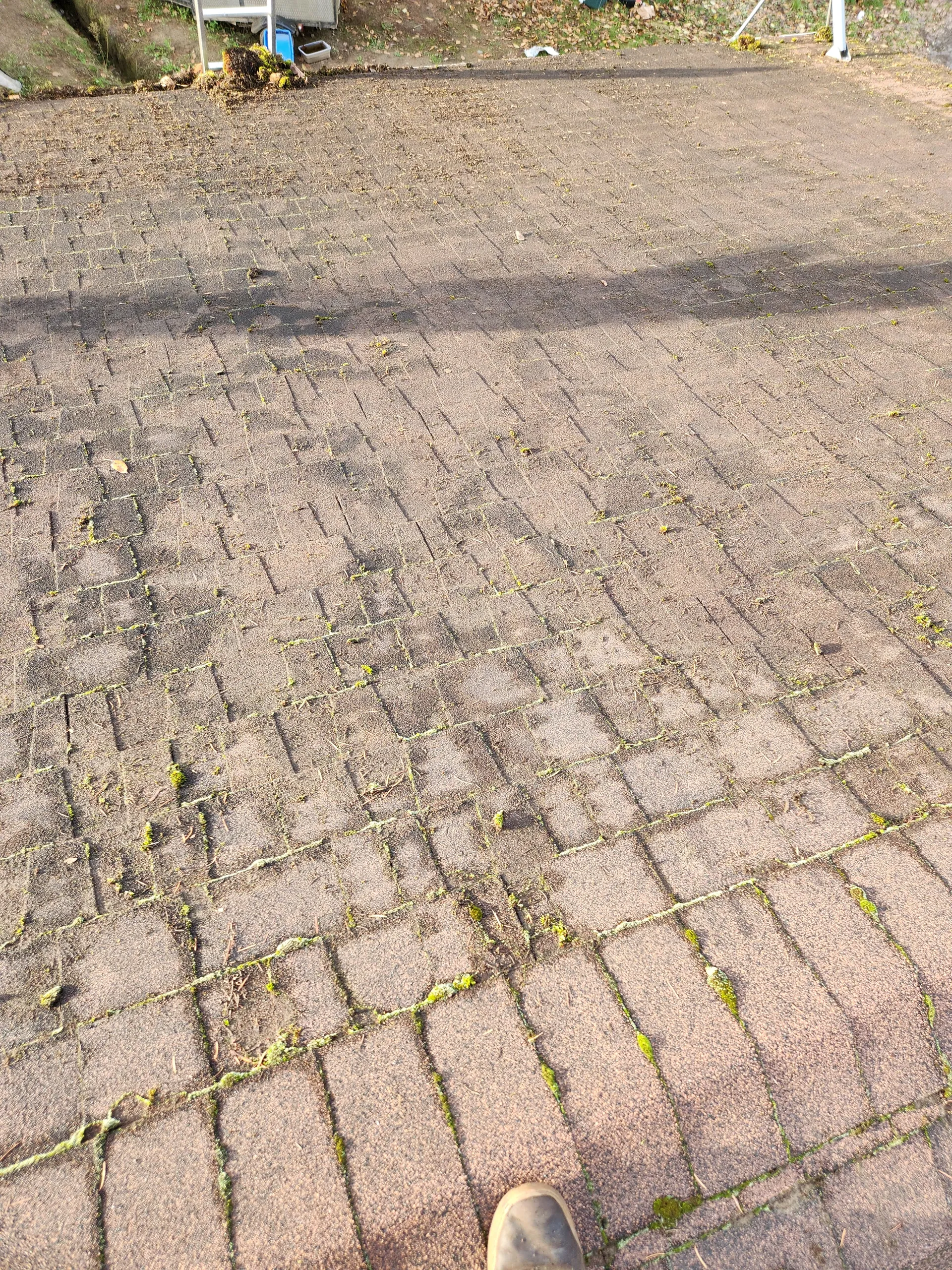
- Moss root penetration — Moss does not just sit on top of shingles. The roots grow between granules and pry them apart, creating channels for water to seep underneath. Our humidity feeds moss growth year-round, not just in spring like drier regions
- Metal fastener corrosion — Roofing nails and exposed fasteners develop rust pitting faster in high-humidity environments. We have pulled nails from 15-year-old Agassiz roofs that looked like they had been soaking in saltwater
- Gutter biofilm buildup — The constant moisture feeds algae and biofilm inside gutters, narrowing the channel and causing overflow that runs behind fascia boards and rots the soffit area. This does not happen in dry climates

The Ventilation Problem Nobody Talks About
Every roofing website tells you ventilation matters. What they do not tell you is that in the Fraser Valley, standard ventilation calculations are not enough. The National Building Code formula for attic ventilation assumes average Canadian humidity levels. We are not average. We are extreme. Johnny and I learned this the hard way when we started seeing condensation damage on roofs that had code-compliant ventilation.
The fix is balanced airflow with oversized capacity. Your attic needs intake at the soffits and exhaust at the ridge, matched 1:1 so air actually moves instead of stagnating. Most older Fraser Valley homes have gable vents that barely function or soffit vents clogged with insulation. Some have ridge vents installed without cutting the sheathing underneath — we see that more than you would think. None of that counts as ventilation. It is decoration.
If your attic smells musty or damp, you likely have a ventilation problem. Do not wait for a visible leak. In the Fraser Valley, by the time moisture damage shows on your ceiling, the sheathing underneath may already need replacement. Fraser Roofing Ltd. checks ventilation on every inspection — call us at (778) 860-4747 before a small problem becomes a deck replacement.
What We Do Differently Because of Humidity
Coming from the oil fields in Alberta, Johnny and I brought a different mindset to roofing. In the oil sands at Suncor and Syncrude, you do not cut corners because the consequences are immediate and brutal. That same discipline shapes how Fraser Roofing Ltd. approaches humidity defense on every roof we touch in the Fraser Valley.
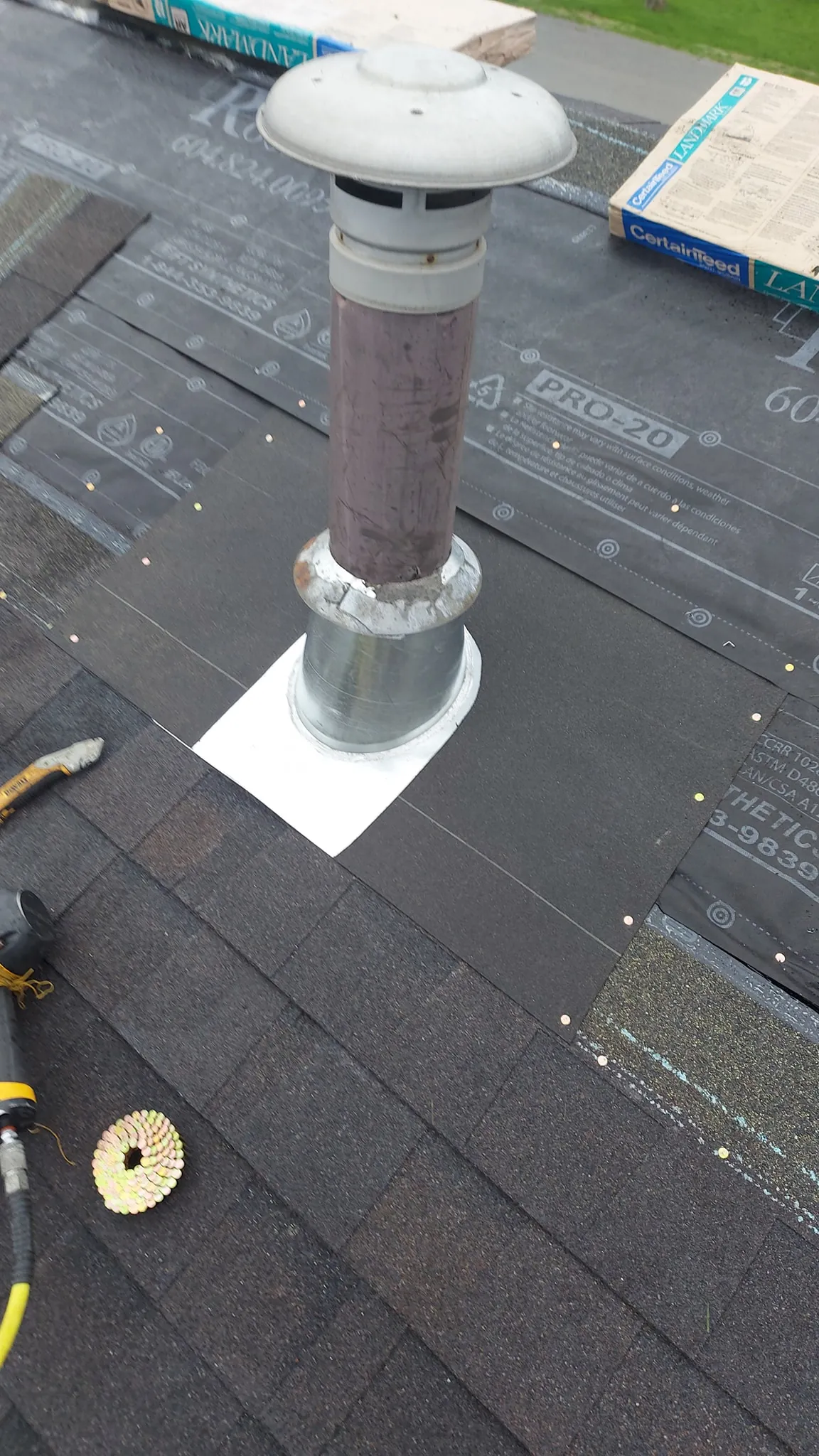
- Synthetic underlayment on every job — Felt paper absorbs moisture. Synthetic does not. The cost difference is minimal but the performance gap is massive in our climate. We stopped using felt paper entirely after seeing too many saturated decks underneath it
- Extended ice and water shield — Code requires ice and water membrane at eaves. We extend it up valleys and around all penetrations because those are the spots where condensation concentrates. In Agassiz and Harrison, we run it further than any other contractor in the valley
- Ridge vent verification — We physically check that the sheathing is cut beneath every ridge vent we install. Sounds obvious, but we have found ridge vents on existing roofs that were installed over solid plywood — zero airflow, just a decorative cap
- Zinc strip installation at peaks — Zinc ions wash down the roof surface when it rains and create an environment hostile to moss and algae. One installation lasts 10 to 15 years. We recommend this on every roof in the fog belt
- North-slope priority inspection — North-facing roof slopes get the least sun and hold moisture longest. We always start inspections on the north side because that is where humidity damage shows up first in the Fraser Valley
The Moss Problem Is Bigger Than You Think
Moss is not cosmetic. People treat it like it is — something ugly that sits on top of the roof. In reality, moss in the Fraser Valley is an active destructive force. The roots grow between shingle granules and physically separate them from the asphalt mat. Each root channel becomes a water pathway. Multiply that across thousands of moss plants on a single roof slope and you have a surface that is essentially perforated.
The worst part is how fast it regrows. In the Okanagan, you might clean moss once every five years. In Agassiz, we see heavy regrowth within six months of cleaning if preventive measures are not installed. That is why we push zinc or copper ridge strips on every moss-prone roof. The metal ions create an antifungal wash that runs down the slope every time it rains. It is not a guarantee — nothing is — but it cuts regrowth rates dramatically and extends the years between cleanings from one to five or more.
Do not pressure wash moss off your shingles. High-pressure water strips granules and accelerates aging. Use a soft wash with a moss-killing solution, let it sit, and rinse gently. Or better yet, call a professional. Fraser Roofing Ltd. offers gentle moss treatment as part of our maintenance packages for Fraser Valley homeowners.
When to Call a Roofer About Humidity Damage
Most of the expensive humidity damage we repair could have been prevented with an earlier inspection. Here are the signals that tell you it is time to get a professional on your roof.
- Dark streaking on the north-facing slope that does not wash off with rain — this indicates algae colonies that are feeding on limestone filler in your shingle granules
- A musty or damp smell in the attic, even when there is no visible water — condensation may be pooling on the underside of the deck or dripping onto insulation
- Shingle edges curling upward, especially on the shaded side of the roof — moisture has broken down the adhesive strip and the tabs are losing their seal
- Moss that regrows within weeks of cleaning — the roof surface has enough retained moisture to sustain rapid regrowth, which usually means granule loss and water penetration underneath
- Soft spots when walking on the roof — the plywood sheathing has absorbed enough moisture to lose structural integrity, which is a safety issue as much as a roofing issue
Johnny and I offer honest assessments. If your roof does not need work, we will tell you. If it does, we will explain exactly what is happening, show you photos, and give you a written quote before we touch anything. That is how we have built Fraser Roofing Ltd. across the Fraser Valley — by being the guys who tell the truth even when it means less work for us. Reach us at (778) 860-4747 or johnny@fraserroofing.ca.
Last updated: February 2026