Safety Isn't a Policy. It's Who We Are.
How oil field discipline keeps every Fraser Roofing crew member alive
Last updated: February 2026
Roofing Kills People
Falls from residential roofs are the number one cause of death in construction. This is not an exaggeration.
- A fall from a two-story house can kill you just as dead as a fall from a high-rise
- Most fatal falls happen to workers who skipped one safety step they had done a thousand times before
- A dropped tool from roof height is a lethal projectile
- Wet shingles are as slippery as ice, the Fraser Valley gets a lot of rain
- If you are not trained, harnessed, and anchored, stay off the roof
We Learned Safety Where Mistakes Kill You Immediately
Before Fraser Roofing existed, Kory and Johnny Peters worked as Red Seal Journeyman Boilermakers in the Alberta oil sands. Safety culture in that world is absolute. You do not walk past a piece of rebar without a cap on it. You do not carry a wrench without a lanyard. You do not step onto a platform without clipping in. If you skip a step, you get sent home, or worse, you do not go home at all.
When we started roofing in the Fraser Valley in 2016, we brought every single one of those habits with us. Some other roofers thought we were overkill. Our speakers are tied off. Our water bottles are tied off. Every tool on the roof has a lanyard because a dropped hammer from two stories is a weapon. We do not care how it looks. We care that after ten years of completed roofs, nobody on our crew has been seriously hurt.
The Most Dangerous Sixty Seconds of Any Roofing Job
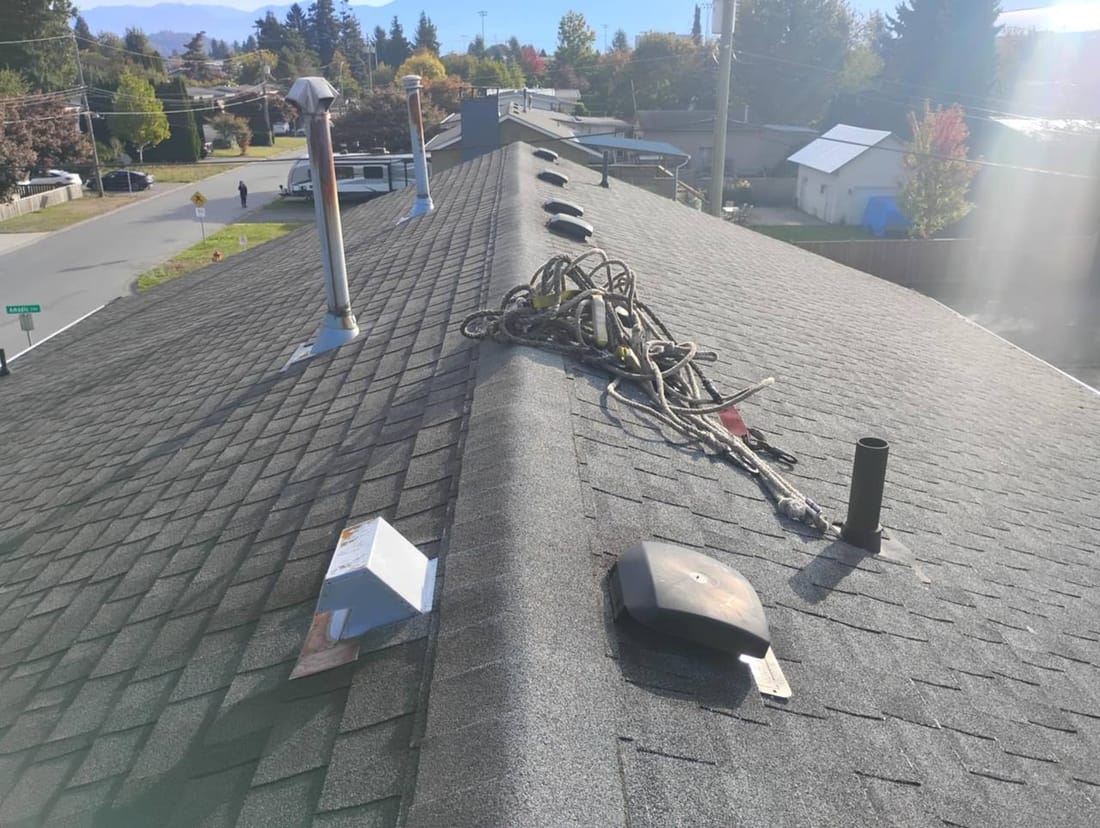
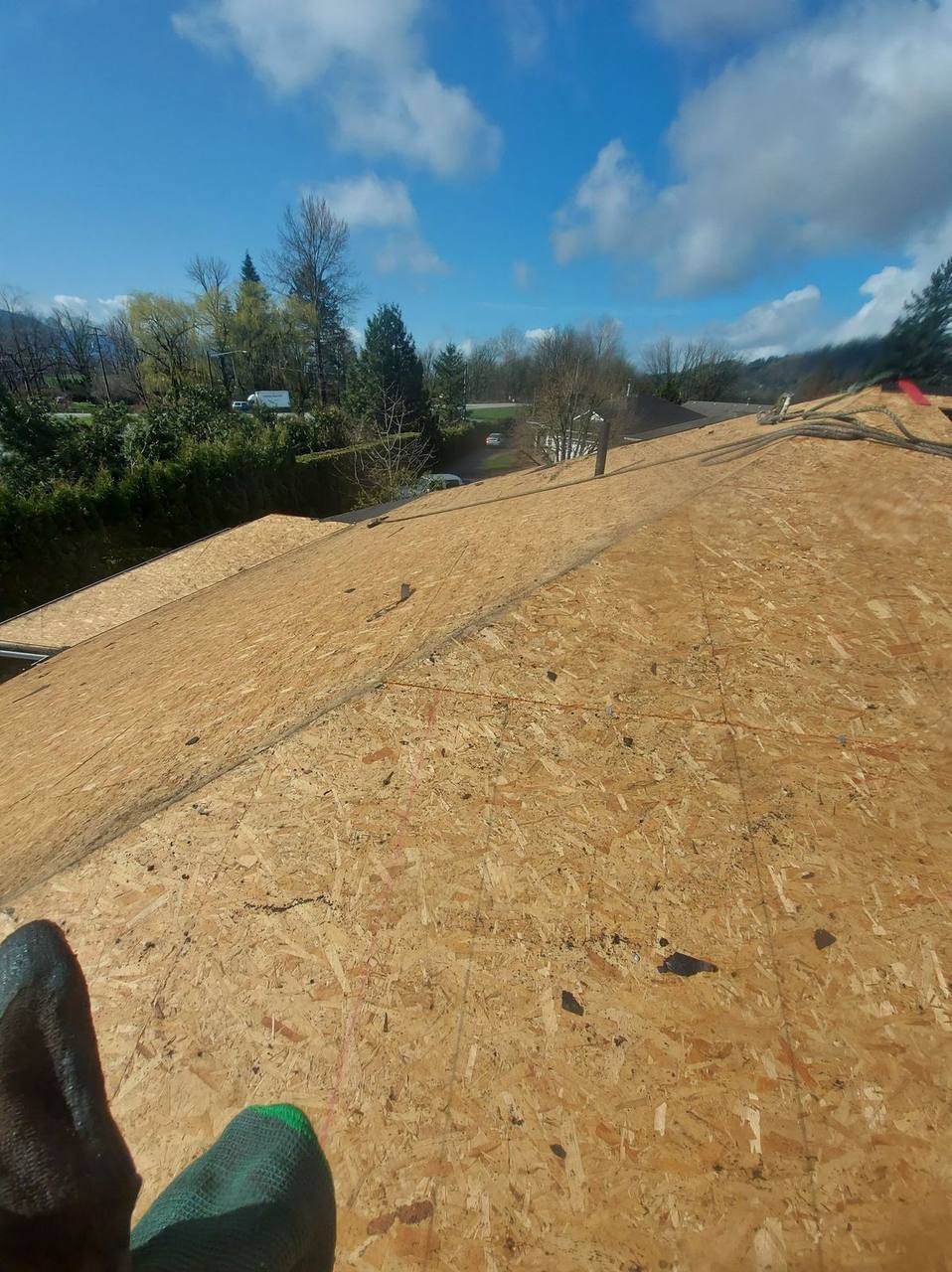
The moment that keeps us sharp is the initial setup. You are climbing onto a roof that has no anchor installed yet. There is no fall protection for those first minutes. The first person up moves slowly, stays on the low side of the slope, and drives a roof anchor directly into a truss, not into sheathing, which can pull out. Nobody else sets foot on that roof until the anchor is set, a lanyard is clipped, and the system is tested with body weight.
That discipline comes straight from oil field protocol. In the sands, you would never climb a vessel without an anchor point waiting for you at the top. Roofing does not always have that luxury, so we built our own procedure: first person up, anchor in, test it, then everybody else follows clipped in.
What Oil Field Safety Looks Like on a Fraser Valley Roof
Every single job. No exceptions. No shortcuts.
- Roof anchors into trusses: not sheathing, not fascia board. Into the structural framing.
- Full-body harnesses with shock-absorbing lanyards: sized and inspected before every use
- Tool lanyards on everything: hammers, nail guns, pry bars, chalk lines, even speakers and water bottles
- Ladder tie-offs at the eave: the ladder does not move, slide, or kick out
- Morning safety briefings: we walk through the specific hazards of that specific roof before anyone climbs
- Buddy system always: nobody works alone on a roof, ever
- Immediate stop-work authority: any crew member can shut the job down for any safety concern, no questions asked
The Numbers Behind Our Safety Rules
37%
of all construction deaths are from falls
65%
of falls happen to workers with under 1 year experience
35%
of falls happen to experienced workers who got comfortable
Zero
serious incidents in ten years on Fraser Valley roofs
That last statistic is the one we think about every morning. Not because we are proud, because we know that complacency is what turns it into a different number. The oil sands taught us that. You never let a clean safety record make you casual. You let it make you more careful, because you have more to protect.
When We Will Not Work
We lose money every time we call a rain day. We do it anyway.
- Rain or wet surfaces: shingles turn into a slip-and-slide. The Fraser Valley has plenty of these days.
- Frost or ice: common on early morning roofs in Agassiz from October through March
- Sustained winds above 25 mph: sheet material becomes a sail, and balance is compromised
- Lightning within 10 miles: a roof is the highest point. We are not interested in being a conductor.
- Extreme heat above 35 degrees Celsius: roof surface temps can hit 70+ degrees. Heat stroke can set in within 15 minutes.
- Any crew member feeling unwell: a dizzy roofer is a dead roofer. Go home, come back healthy.
A Word to Homeowners Thinking About DIY
We get it. Roofing is expensive, and you want to save money. But here is what we have seen in our years doing this work: the people who get hurt worst are not reckless. They are careful, capable people who simply did not understand how fast a roof can go wrong. A patch of morning dew you did not notice. A gust of wind you did not expect. A board that looked solid but was not.
The $3,000 to $5,000 you save doing it yourself is not worth your life. It is not worth a spinal cord injury. It is not worth explaining to your kids why Dad cannot walk anymore. Call us at 604-728-0146 for a free inspection. Let the people with the harnesses, the anchors, and the oil field training handle it.
Want someone to look at your roof?
Kory & Johnny have roofed homes across the Fraser Valley since 2016. Free inspections, honest estimates, no pressure.
604-728-0146Text UsEmailServing Hope, Agassiz, Chilliwack, Rosedale, Abbotsford & the entire Fraser Valley
Deep Dives: Safety Topics
Below you will find detailed guides on every major safety category we deal with on Fraser Valley roofs. Each one is written from real experience, not textbook theory, but lessons from years of jobs in Agassiz, Chilliwack, Harrison, Hope, and everywhere in between.
Fall Protection
Harnesses, anchors, lanyards, the systems that keep you alive on steep slopes
Ladder and Tool Safety
Proper setup, tie-offs, and why every tool needs a lanyard
Heat and Weather Safety
Heat stroke prevention and knowing when conditions are too dangerous
Emergency Procedures
What to do when something goes wrong on a roof
Questions About Roofing Safety?
We are always happy to talk safety with homeowners, contractors, or anyone who works at height. No sales pitch, just honest answers from two tradesmen who take this seriously.
Call 604-728-0146Text UsEmailFraser Roofing, Agassiz, BC | Serving the Fraser Valley
Frequently Asked Questions
Why does Fraser Roofing take safety so seriously compared to other Fraser Valley roofers?
Kory and Johnny Peters are Red Seal Journeyman Boilermakers who spent years in Alberta oil sands before starting out in roofing in 2016. Oil field safety culture is extreme, everything gets tied off, every tool gets a lanyard, every worker gets a harness. They brought that same discipline to residential roofing in the Fraser Valley. After ten years of roofs without a serious incident, the system works.
What safety equipment does Fraser Roofing use on every job?
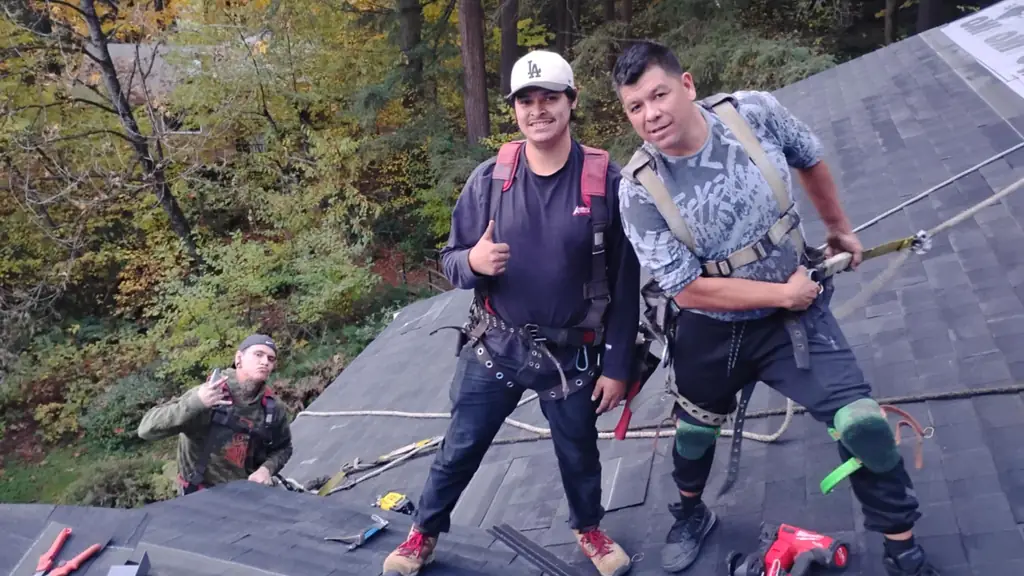
Every job starts with roof anchors drilled into trusses (not just sheathing), full-body harnesses, shock-absorbing lanyards, and tool lanyards on every single tool. Even speakers and water bottles get tied off. The crew also uses ladder tie-offs, proper PPE including safety glasses and cut-resistant gloves, and maintains first aid kits and hydration stations on site.
What is the most dangerous moment during a roofing job?
The initial setup, climbing onto a roof with no anchor point yet installed. This is the window where you have zero fall protection. At Fraser Roofing, the first person up moves slowly, stays low on the slope, and installs the roof anchor into a truss immediately. Nobody else comes up until that anchor is set and tested. Most roofing falls happen in the first hour of work, and this transition is the riskiest part.
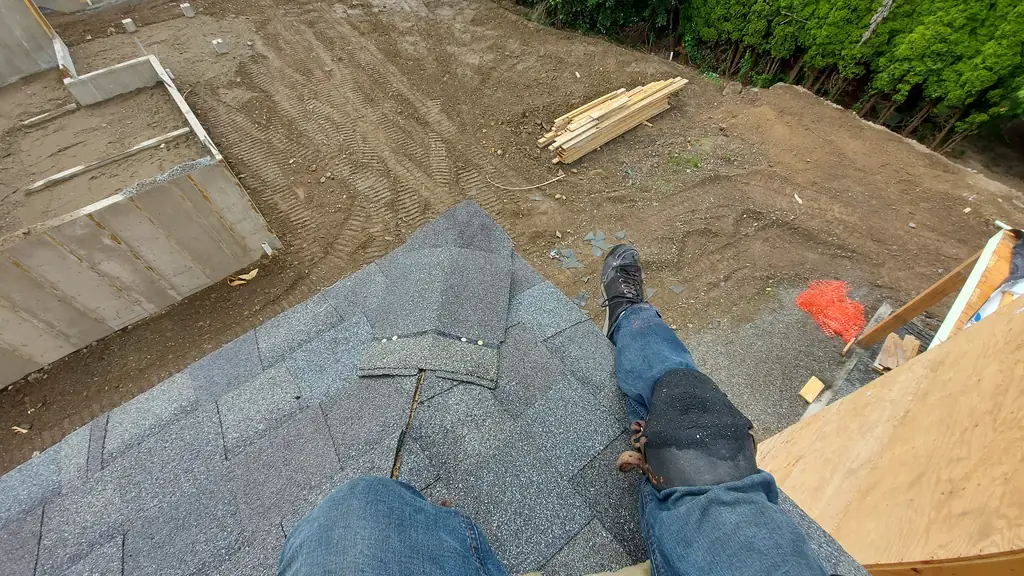
Should homeowners in Agassiz or the Fraser Valley attempt DIY roof repairs?
We strongly advise against it. A dropped hammer from two stories is a weapon. A slip on wet shingles can end a life. The $3,000-5,000 you save is not worth the risk. If you absolutely must go up, invest in a proper harness system and roof anchor first, and never go alone. Better yet, call 604-728-0146 for a free inspection.
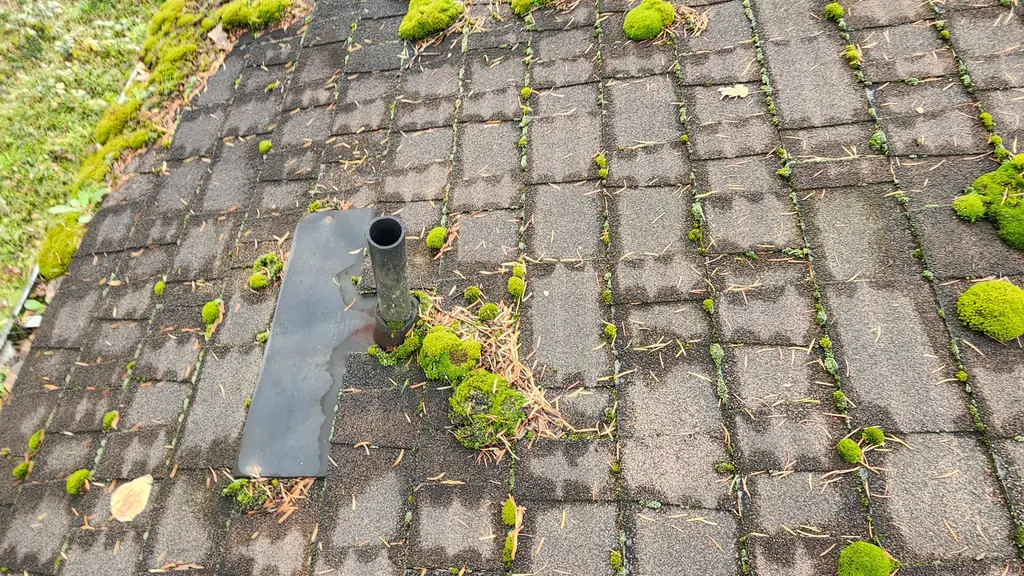
What conditions will stop Fraser Roofing from working on a roof?
Rain, frost, ice, winds above 25 mph, lightning within 10 miles, extreme heat above 35 degrees Celsius, or poor visibility. The Fraser Valley gets a lot of rain, and wet roofs are extremely slippery. We also stop work if any crew member is feeling unwell or fatigued. No deadline is worth an injury.
$1,000 off applies to full roof replacements of 3,000 sq ft or more. Cannot be combined with other offers or previously placed orders. Not valid on partial jobs, repairs, or insurance claims.