I will be honest with you. The first time I had to help a homeowner fight an insurance claim, I had no idea what I was doing. It was early 2022, maybe six months after Johnny and I started Fraser Roofing Ltd. out of Agassiz. A November storm had torn shingles off a house in Rosedale and the homeowner called us in a panic. We fixed the roof, wrote up what we found, and the insurance company came back with a settlement that barely covered materials. I sat in that kitchen watching a good family get lowballed and I thought — never again.
Since then, we have been involved in dozens of insurance claims across the Fraser Valley. From Hope to Abbotsford, from straightforward wind damage to complicated multi-system failures after atmospheric rivers. I have learned what adjusters look for, what language they respond to, and exactly how to document a roof so the evidence speaks for itself. This is everything I know, written for Fraser Valley homeowners who deserve a fair shake.
What Your BC Home Insurance Actually Covers — And What It Does Not
Before a single shingle blows off, you need to understand your policy. I have seen homeowners assume everything is covered, file a claim, and get denied because they never read the fine print. Here is the reality for most Fraser Valley policies.
Covered: Sudden Accidental Damage
- Wind damage — missing shingles, lifted flashing, blown-off ridge caps
- Hail impact — dented metal, cracked shingles, broken skylights
- Fallen trees and branches that strike your roof during a storm
- Ice and snow accumulation that causes structural failure or collapse
- Fire and smoke damage to roofing materials
- Vandalism — deliberate damage by others to your roof
Not Covered: Gradual Deterioration
- Moss damage — even though moss destroys Fraser Valley roofs faster than almost anything else, insurers classify it as maintenance neglect
- Slow leaks that develop over months or years from worn flashing or aging sealant
- General wear and tear — shingles past their expected lifespan
- Flood damage — requires a separate overland water policy, critical near the Fraser River
- Poor installation by a previous contractor — your insurer did not approve the work
- Rodent or pest damage to roofing materials or attic space
Fraser Valley homeowners near the Fraser River, Harrison Lake, or in flood-prone areas of Agassiz and Chilliwack: standard home insurance does NOT cover flood damage. You need a separate overland water endorsement. After the 2021 atmospheric river, many families learned this the hard way. Check your policy now, before the next event.
The 48-Hour Rule: What to Do Immediately After Storm Damage
The clock starts ticking the moment damage occurs. Most BC insurers expect you to report within 24 to 48 hours. Here is the exact sequence Johnny and I walk homeowners through when they call us after a storm.
- Step 1: Stay safe. Do not climb on a damaged roof. Period. We have seen homeowners make things worse and injure themselves.
- Step 2: Document from the ground. Walk the perimeter of your home. Photograph every angle of the roofline, fallen debris, damaged gutters, and any interior water stains. Use your phone to take video — adjusters take video more seriously than photos alone.
- Step 3: Call your insurance company within 24 hours. Open the claim. Get a claim number. Write down the name of every person you speak to.
- Step 4: Call us at (778) 860-4747. We will get to your property within 24 hours for an emergency inspection and provide a professional report the adjuster will take seriously.
- Step 5: Make temporary repairs to prevent further damage — tarp the area, bucket interior leaks. Keep every receipt. Temporary repairs are almost always reimbursable.
- Step 6: Do NOT sign any settlement or release until you have had the damage independently assessed.
When you call your insurer, use specific language: "sudden storm damage," "wind event," "impact damage." Avoid saying things like "it has been leaking for a while" or "the roof is old." Those phrases give adjusters ammunition to classify the damage as maintenance-related and deny your claim.
Why Your Own Inspection Report Matters More Than You Think
Here is something most homeowners do not realize: the insurance adjuster works for the insurance company. Their job is to minimize the payout. I am not saying they are dishonest — most are professionals doing their job. But their job and your interests are not aligned.
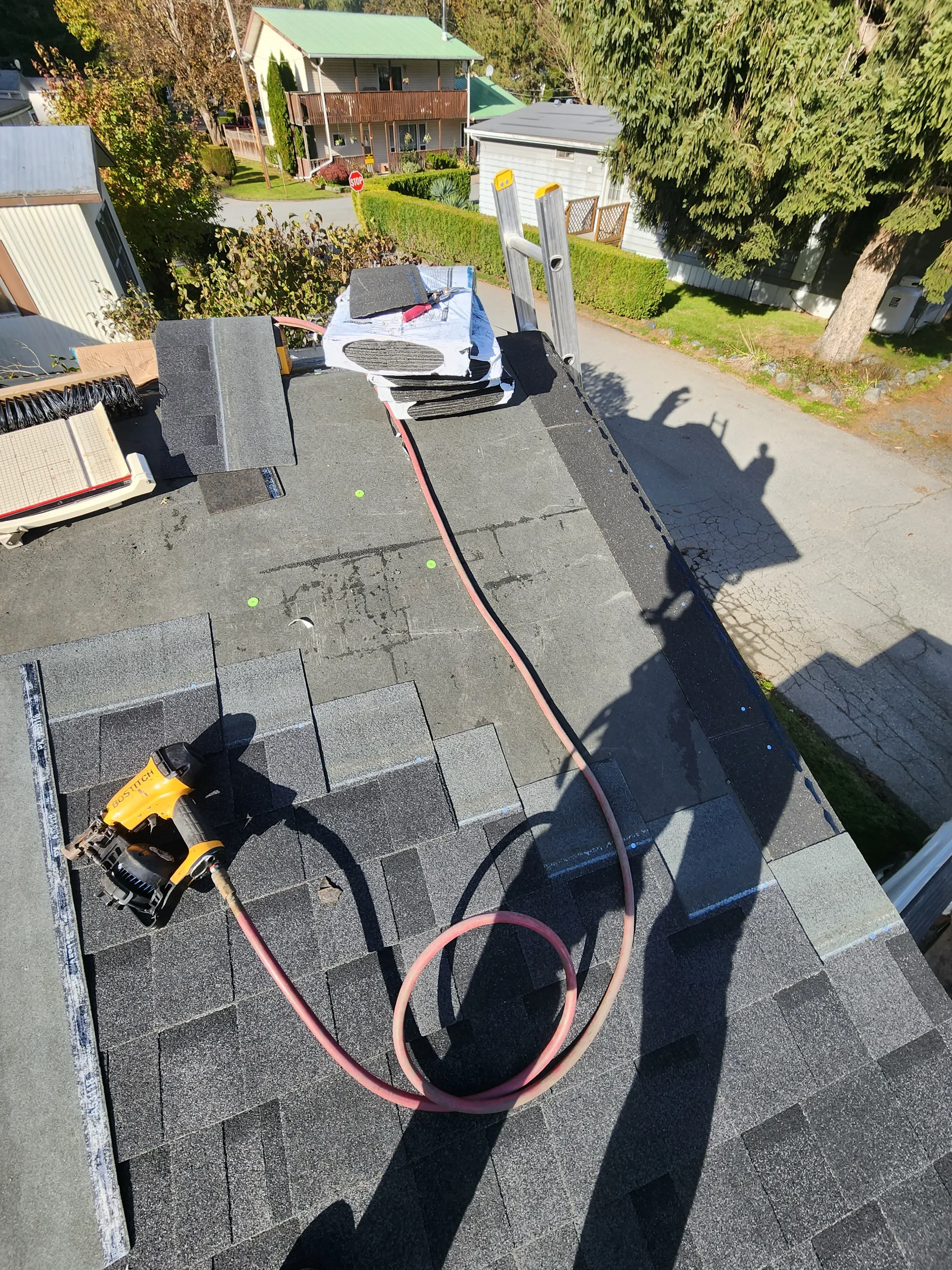
When Johnny and I inspect a roof for an insurance claim, we document everything with a level of detail that comes from actually doing the repairs. We measure damaged areas to the square foot. We photograph fastener patterns to show wind uplift versus natural aging. We note the condition of undamaged sections to prove the roof was maintained. This is the kind of evidence that separates a denied claim from a fair settlement.
- We photograph the entire roof, not just the damaged area — this proves maintenance history
- We document the specific failure mode: was it adhesive strip failure, nail pull-through, or wind uplift?
- We measure and calculate repair costs using current Fraser Valley material and labor pricing
- We provide a written scope of work that the adjuster can compare against their own estimate
- We include the date, weather data from the specific storm event, and reference to any Environment Canada warnings
The Oil Field Documentation Discipline
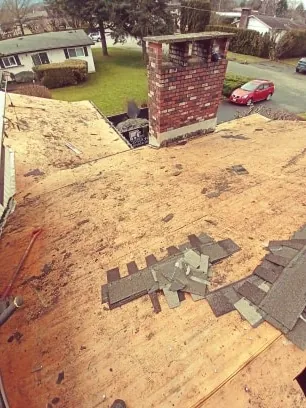
Before Johnny and I were roofers, we were Red Seal Boilermakers in the Alberta oil sands. Every weld, every inspection, every incident gets documented like it is going to court. That mindset transferred directly into how we handle insurance work. Your adjuster was not standing in the rain at 6 AM — your photos and notes are your evidence. Do it right the first time because you do not get a second chance at initial documentation.
We keep our own copies of every report, every photo set, every measurement. If a claim gets challenged six months later, we can pull the file and produce the exact same evidence that was submitted originally. Oil field discipline means the paperwork is always complete, always dated, always backed up.
Negotiating With Adjusters: Five Years of Fraser Valley Lessons
I have sat across from adjusters in kitchens in Chilliwack, in living rooms in Hope, and on driveways in Agassiz. Here is what I have learned about getting claims approved and settled fairly.
- Be honest. Inflated claims get flagged and denied. We have never padded an estimate and we never will — it destroys credibility for everyone.
- Be organized. Adjusters process dozens of claims after a major storm. The homeowner with a clear, professional report gets attention first.
- Challenge the scope, not the person. If the adjuster misses damage, point it out with documentation. Do not argue — show evidence.
- Request a re-inspection if you disagree with the assessment. You have the right to have the adjuster return with your roofer present.
- Know the difference between Actual Cash Value and Replacement Cost. ACV deducts depreciation. Replacement Cost pays to restore. Most good policies include replacement cost coverage — confirm yours does before you need it.
After the November 2021 atmospheric river that flooded parts of Agassiz and the Fraser Valley, insurance claim volume overwhelmed adjusters for months. Response times stretched to weeks. Homeowners who had professional inspection reports ready when the adjuster finally arrived got processed faster and settled at higher amounts. Preparation is everything.
The Maintenance Log That Saves Claims
This is the single most valuable piece of advice in this entire article. If you take nothing else away, remember this: keep a maintenance log for your roof. A simple folder — digital or physical — with dated photos from annual inspections, receipts for gutter cleaning, moss treatment invoices, and records of any repairs.
When storm damage hits, this folder is your proof that the damage is sudden and accidental — not the result of years of neglect. I have had homeowners pull out our inspection reports from the previous year to show an adjuster that the roof was in good condition before the storm. Claims approved, full settlement, no argument. That $200 inspection paid for itself a hundred times over.
Mistakes That Get Fraser Valley Homeowners Denied
- Waiting too long to report — anything beyond 48 hours raises red flags with BC insurers
- Admitting to deferred maintenance during the adjuster visit — even casual comments like "we knew that flashing was getting old" can sink a claim
- Making permanent repairs before the adjuster inspects — temporary tarps are fine, but do not strip and re-shingle before documentation is complete
- Not getting an independent estimate — the insurance company estimate is their opening position, not the final word
- Accepting the first settlement without review — you can negotiate, request re-inspection, or escalate to a supervisor
- Throwing away damaged materials — keep a sample of every damaged shingle, piece of flashing, or broken component until the claim is fully closed
Never let a contractor pressure you into signing an Assignment of Benefits (AOB) that gives them control of your insurance claim. You should always retain control of your own claim. At Fraser Roofing Ltd., we never ask for AOB — we work alongside you, not instead of you.

A Real Story: The Rosedale Kitchen Table Claim
I mentioned the family in Rosedale at the start of this article — the ones who got lowballed on their first storm claim in 2022. After that experience, I went back to their house with Johnny. We re-documented everything. We measured every damaged area, photographed every fastener failure, cross-referenced the weather data from Environment Canada for that specific storm.
We requested a re-inspection. When the adjuster came back, we walked the roof together — harnesses on, everything tied off the way we do it. We showed them three areas of wind uplift they had missed and a section of compromised step flashing that was actively leaking into the wall cavity. The revised settlement covered the full repair plus the temporary protection costs the family had already paid out of pocket.
That family still calls us for their annual inspection. Their maintenance log is three years deep now. If another storm hits, their next claim will be the easiest one their adjuster processes all week.
Call Fraser Roofing Ltd.: Insurance Claim Support Across the Fraser Valley
Johnny and I built this company on doing honest work for Fraser Valley families. When it comes to insurance claims, that means accurate documentation, fair pricing, and the experience to help you navigate a system that was not designed to be homeowner-friendly. We have worked on claims from Hope to Abbotsford, from small wind-damage repairs to full replacements after major storms.
If you have storm damage, call (778) 860-4747. We will inspect your roof, provide a detailed report, and walk you through the claims process step by step. If the damage is not covered or does not warrant a claim, we will tell you that too. No pressure, no games — just the truth about your roof.
Last updated: February 2026. Insurance policies and coverage details change regularly. Always verify your specific coverage with your insurance broker. This guide reflects our experience helping Fraser Valley homeowners from Agassiz, Chilliwack, Hope, Harrison, Abbotsford, and Mission navigate the claims process since founding Fraser Roofing Ltd. in 2026.