I will be honest — when Johnny and I started Fraser Roofing Ltd. back in 2026, I thought roof color was the simplest part of the job. Grab a swatch book, hold it up to the house, pick whatever the homeowner likes. Done. It took about thirty roofs before I realized how wrong I was, and one particular house in Agassiz taught me the lesson permanently.
The Agassiz Attic That Changed How We Think About Color
A homeowner on Pioneer Avenue wanted jet black shingles. Beautiful house, white siding, the contrast would have been stunning. We installed them. Two months later, mid-July, she called us back. Her upstairs bedrooms were unbearable. I climbed into that attic with a thermometer and measured 68 degrees Celsius — hot enough to cook on. The dark shingles were absorbing every bit of summer sun that the Fraser Valley could throw at them. Her AC bill had nearly doubled.
We ended up installing additional ridge vents and soffit baffles to manage the heat, but I never forgot that lesson. Since then, color selection has become one of the most detailed conversations we have with every homeowner. It is not about aesthetics alone — it is about how your roof performs for the next 25 years in this specific climate.
What Five Years in the Fraser Valley Taught Us About Shingle Colors
After 500-plus roofs from Hope to Abbotsford, patterns emerge that no manufacturer brochure will tell you. The Fraser Valley is not like the rest of BC, and it is definitely not like the American markets where most color guides are written for. Here is what we have learned on actual rooftops.
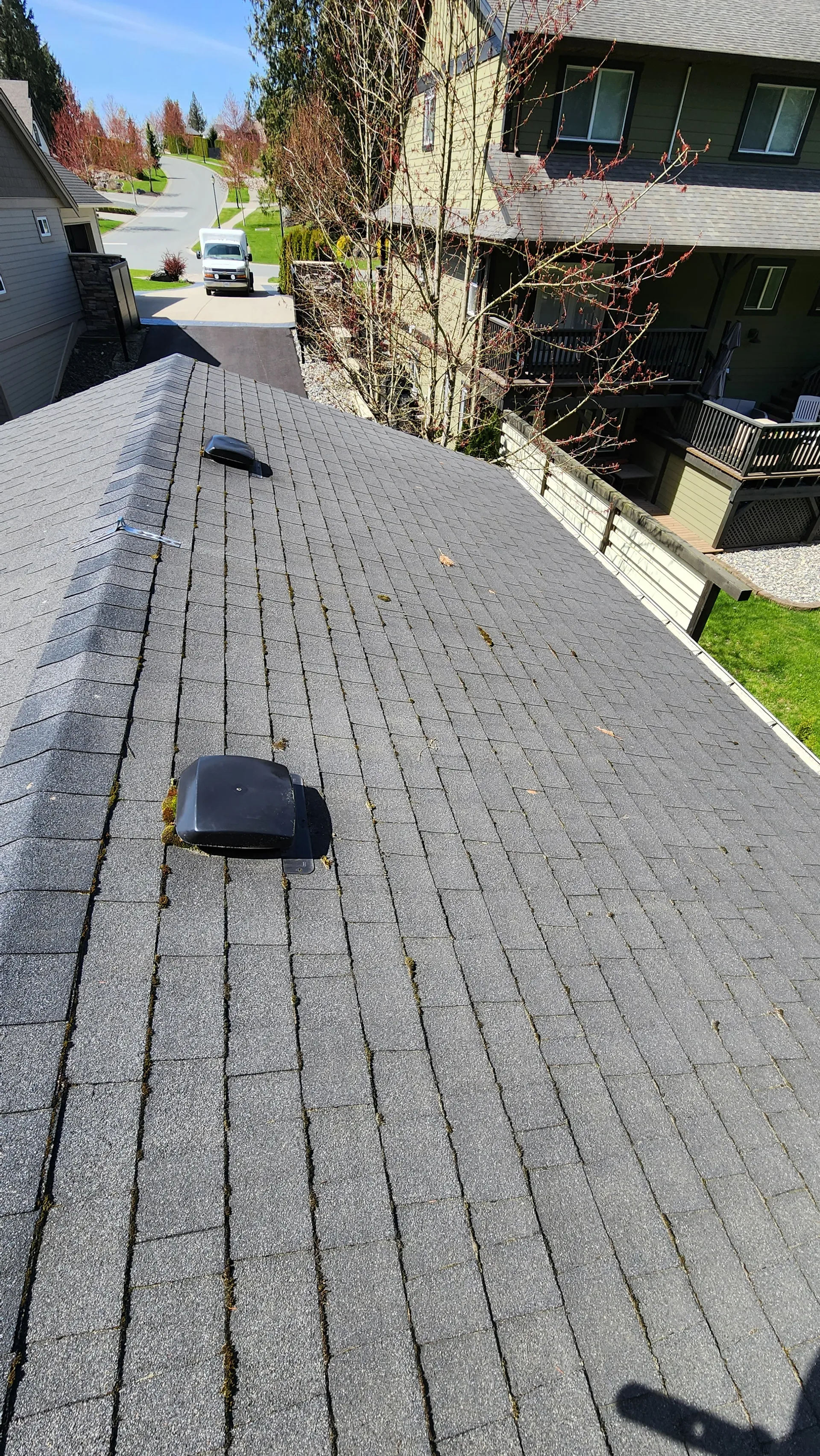
- Light-colored shingles (dove gray, birchwood, light pewter) show moss and algae staining within 18 months in shaded areas — and most of Agassiz and Harrison have significant tree cover
- Pure black and estate black absorb enough summer heat to stress shingle granules faster, potentially shortening lifespan by 2-3 years compared to medium tones
- Medium tones like charcoal, weathered wood, and driftwood consistently perform best for our climate — they balance heat, hide staining, and age gracefully
- Two-tone architectural shingles with color variation camouflage both dirt and early moss growth far better than solid-color three-tabs
- The same color looks dramatically different on a sunny Abbotsford lot versus a valley-floor property in Agassiz under overcast skies
We bring physical shingle samples to every estimate appointment. We hold them against your siding, your trim, your front door — in actual daylight, not showroom lighting. A color that looks perfect on a screen or in a store can look completely wrong on your house.
The Heat Science — Simplified for Real People
Johnny is the numbers guy between us. He measured attic temperatures across dozens of our installs one summer and the data was clear. Light-colored roofs reflected 60 to 70 percent of solar heat. Dark roofs absorbed 70 to 80 percent. The difference was consistently 20 to 40 degrees Fahrenheit in attic temperature on sunny days.
But here is what the internet articles leave out: in the Fraser Valley, we have maybe 60 genuinely hot days per year. We have 200-plus days of overcast, rain, and cool temperatures where heat absorption actually helps keep your home warmer. A purely white or very light roof might save you fifteen dollars a month in July but cost you that much or more in heating from November through March. Medium tones split the difference almost perfectly for our climate.
If your home has poor attic insulation or inadequate ventilation, fix those first before worrying about shingle color. Proper ventilation matters ten times more than color for temperature management in Fraser Valley homes. We check ventilation during every color consultation — the two decisions are connected.
Color Matching — The Mistakes We See Homeowners Make
The most common mistake is choosing a roof color from a two-inch sample chip and then being surprised when 30 squares of that color on your roof look nothing like the chip. Color behaves differently at scale, and it changes completely depending on the light. A warm brown that looks rich at noon can look muddy pink at sunset. A clean gray that looks modern under clouds can look cold and institutional in bright sun.
- Warm siding (cream, beige, tan, yellow) pairs best with warm shingle tones — weathered wood, autumn brown, aged bark
- Cool siding (gray, blue, white) works better with charcoal, slate, pewter, or harbor blue
- Red brick homes look best with dark charcoal or black — avoid brown tones that clash with the brick undertones
- Cedar or wood-toned homes complement driftwood, shakewood, or desert tan shingles beautifully
- Stone or stucco exteriors are the most flexible — almost any neutral shingle tone works
Moss, Algae, and the Colors That Hide Them
This is the Fraser Valley factor that nobody outside BC talks about. With our 1,500-plus millimeters of annual rainfall and mild winters, every roof in the valley eventually grows moss. The question is not if, but when — and which colors make it less visible while you wait for your next cleaning cycle.
In our experience, the ranking from best to worst for hiding moss staining goes: dark charcoal, weathered wood, driftwood, medium gray, light gray, and then white at the bottom. We have seen light dove-gray roofs in Harrison that looked like they had not been cleaned in a decade after just three years, while a charcoal roof two streets over — same age, same tree cover — still looked sharp.
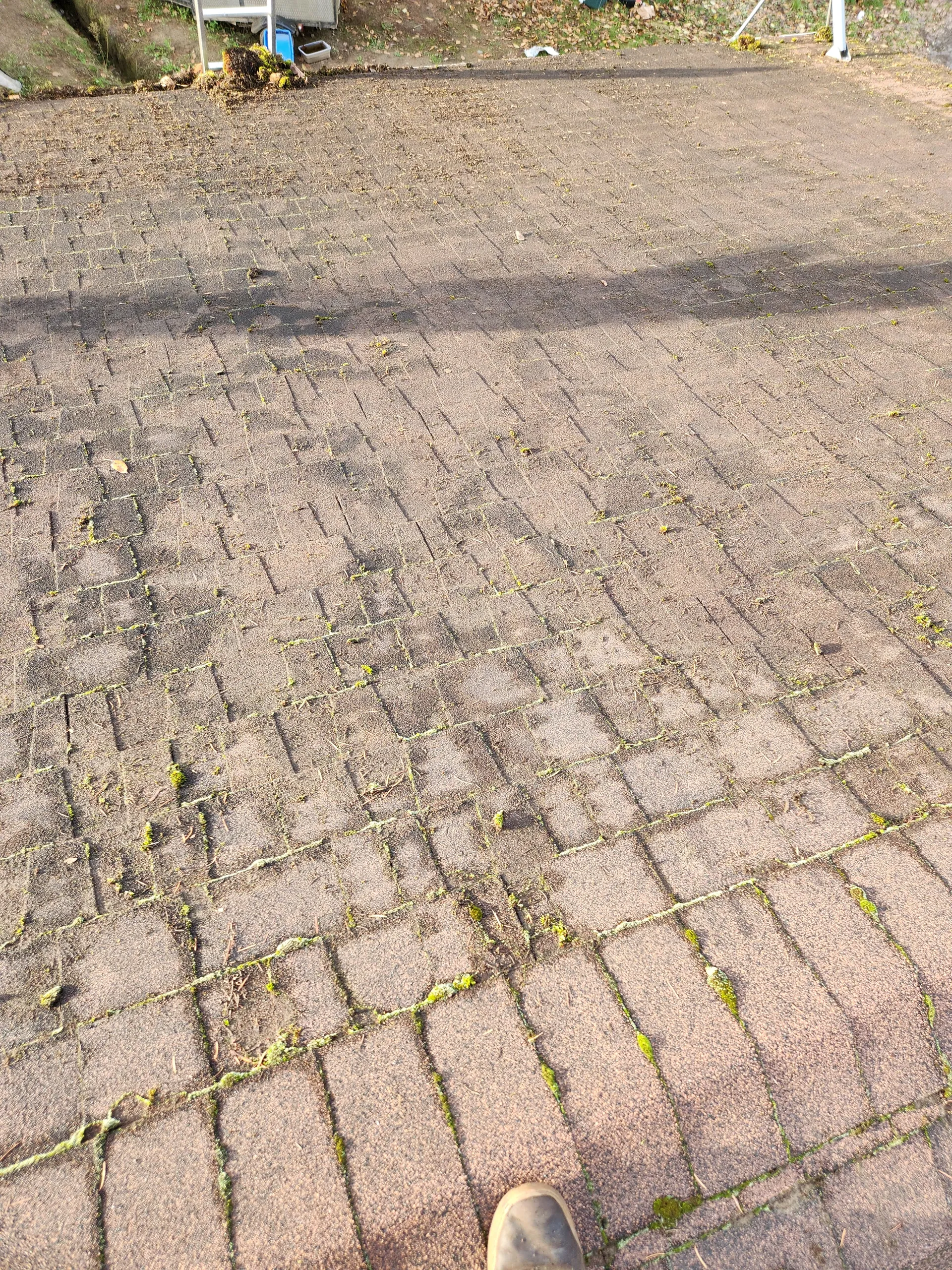
Ask about shingles with algae-resistant granules built in. Manufacturers like CertainTeed and IKO offer lines with copper or zinc granules that inhibit moss and algae growth. Combined with a mid-tone color, these shingles can look clean for 8 to 10 years in the Fraser Valley before needing treatment.
What Roof Color Does to Your Resale Value
Johnny and I have talked to enough real estate agents in Chilliwack and Abbotsford to know this: a roof that stands out for the wrong reason kills curb appeal instantly. Buyers notice the roof first because it is the largest visible surface of your home. The safest play for resale value is a neutral that complements the neighborhood.
- Charcoal gray has the broadest appeal across all Fraser Valley neighborhoods and home styles
- Weathered wood tones work perfectly for the rural and semi-rural properties common in Agassiz, Rosedale, and Harrison
- Bold colors like harbor blue or forest green can work on the right house but cut your buyer pool significantly
- If you are roofing specifically to sell, ask your realtor before choosing — a hundred-dollar conversation can save thousands in perceived value
- Matching or complementing the dominant roof color in your neighborhood is almost always the right call
Our Color Consultation Process
Every Fraser Roofing Ltd. estimate includes a hands-on color consultation at no extra charge. We bring full-size sample boards to your property — not tiny chips. We hold them against your siding, your trim, your garage door. We look at them in morning light and afternoon light if needed. We take photos so you can review with your family before deciding.
We also factor in practical considerations that go beyond aesthetics: your tree cover, your roof pitch and sun exposure, your ventilation setup, and how long you plan to stay in the home. A homeowner planning to sell in two years gets different advice than someone who just bought their forever home.
Call Fraser Roofing Ltd. at (778) 860-4747 to schedule a free estimate that includes our full color consultation. We serve the entire Fraser Valley from Hope to Abbotsford, with our shop based right here in Agassiz. Last updated: February 2026.