I am going to tell you something most roofing companies will not: there is no universally "better" material. After installing both asphalt and metal on more than 500 roofs from Hope to Abbotsford, my brother Johnny and I have seen each material shine — and each one fail — depending on the situation. This is our honest breakdown, no sales pitch attached.
How We Ended Up Installing Both Materials
Before Johnny and I started Fraser Roofing Ltd. in 2026, we were Red Seal Journeyman Boilermakers in the Alberta oil sands — Suncor, Syncrude, CNRL, MEG Energy. We welded metal in every condition you can imagine: minus forty, driving rain, blistering heat. When we came home to the Fraser Valley and picked up roofing, metal felt natural to us. But the reality of residential roofing in BC taught us fast that asphalt shingles are not the "cheap option" people make them out to be. Installed right, they perform beautifully in our climate. We learned to respect both materials on their own terms.
The Real Cost Breakdown — 2026 Fraser Valley Prices
Forget the national averages you see online. Here is what we actually charge for a typical 2,000 sq ft home in the Fraser Valley, including full tearoff, underlayment, flashing, and cleanup:
- Architectural asphalt shingles (IKO Cambridge, BP Mystique): $9,000-$16,000 installed
- Exposed-fastener metal panels (AG Panel, Classic Rib): $14,000-$22,000 installed
- Standing seam metal (Snap-Lock, mechanical seam): $22,000-$38,000 installed
- Premium designer asphalt (IKO Crowne Slate, BP Harmony): $13,000-$20,000 installed
These are 2026 prices for the Fraser Valley specifically. Material costs have climbed about 8% since 2023 due to petroleum-based product inflation and supply chain adjustments. We update our quotes monthly to reflect current supplier pricing from Roofmart Chilliwack, Roofmart Abbotsford, and Pioneer Building Supplies.
The 50-Year Math That Changed My Mind About Metal
I used to think metal roofing was overkill for most homes. Then I started tearing off second and third asphalt roofs on the same houses. A home in Harrison Hot Springs had its third set of shingles in 45 years — that is about $35,000 in total roofing costs, adjusted for inflation. A standing seam metal roof installed once would have cost $28,000 and still had 15+ years of life left. That math is hard to argue with.
- Asphalt shingle lifespan in Fraser Valley: 18-25 years (moisture shortens it vs. drier climates)
- Standing seam metal lifespan: 50-70 years with minimal maintenance
- Exposed-fastener metal lifespan: 25-35 years (fastener gaskets degrade over time)
- 50-year cost of asphalt: $27,000-$48,000 (2-3 full re-roofs)
- 50-year cost of standing seam: $22,000-$38,000 (one installation, periodic fastener checks)
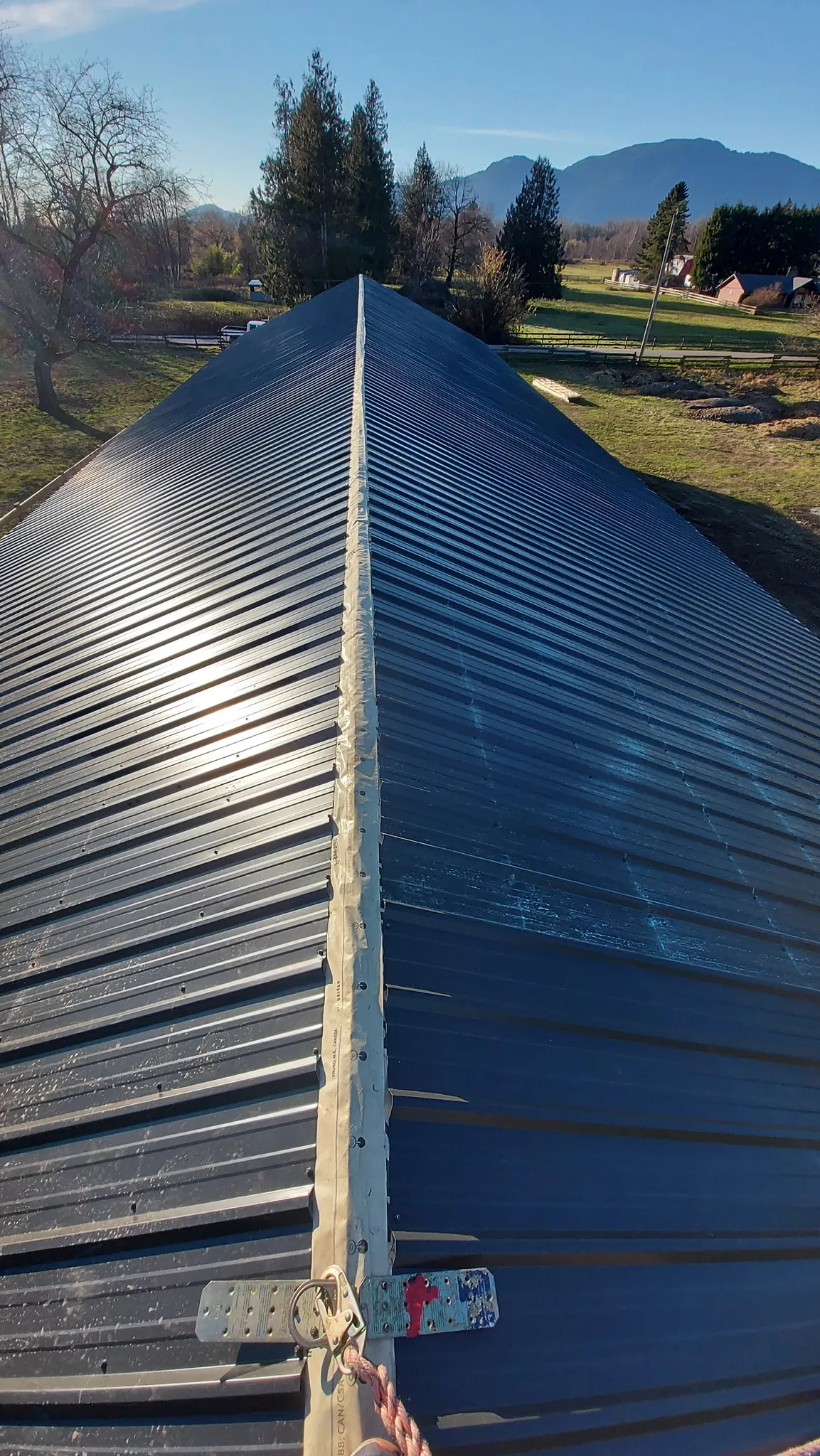
One thing the metal roofing sales guys will not tell you: exposed-fastener metal panels are NOT a 50-year roof. The neoprene gaskets under every screw dry out and crack in 15-25 years, causing leaks at every penetration. If you want true longevity, standing seam with concealed clips is the way to go. We have seen too many barns and shops leak at the fasteners after two decades.
How Fraser Valley Weather Beats Up Each Material
We get 1,500mm+ of rain a year here. Winter storms scream down the Fraser Canyon at 80-100km/h. Summer heat bakes south-facing slopes. This is not a gentle climate for roofing materials. Here is how each one holds up based on what we see during tearoffs and inspections:
- Rain shedding: Metal wins. Water runs off instantly. Asphalt shingles absorb moisture — up to 30% of their weight after prolonged exposure — which accelerates granule loss.
- Wind resistance: Metal wins for standing seam (rated 180+ km/h). Quality architectural shingles hold up well to 130km/h when properly nailed. Three-tab shingles lose tabs in any serious storm.
- Snow load: Metal wins. Snow slides off metal panels naturally. Asphalt holds snow, which means more weight on your structure and potential ice dams.
- Moss and algae: Metal wins. Our moss-heavy climate turns neglected asphalt roofs green in 3-5 years. Metal resists biological growth almost entirely.
- Hail resistance: Depends on the product. Class 4 impact-resistant asphalt shingles (like IKO Crowne Slate) perform as well as most metal panels. Standard asphalt bruises easily.
- Heat cycling: Draw. Both expand and contract with Fraser Valley temperature swings, but metal is noisier about it. If you are a light sleeper, that ticking and popping on hot days might bother you.
When We Recommend Asphalt — And Mean It
About 60% of our residential jobs are asphalt shingles, and we are not apologizing for that. Here is when asphalt is genuinely the right call:
- Your budget is under $16,000 and you need a full re-roof now — not later
- You plan to sell within 10-15 years. Buyers appreciate a newer roof regardless of material, and asphalt gives you maximum coverage per dollar.
- Your roof has complex geometry — lots of valleys, dormers, skylights. Asphalt is faster and cheaper to work around penetrations. Metal flashing at complex intersections adds serious labor cost.
- You want a specific aesthetic. Architectural shingles come in dozens of color and texture combinations that metal cannot replicate.
- Your home is in a neighborhood where every roof is asphalt. A metal roof can look out of place and may not boost resale value as much as you would hope.
Our go-to asphalt recommendation for Fraser Valley homes: IKO Cambridge architectural shingles with a full synthetic underlayment and 6-foot ice-and-water shield at all eaves and valleys. This setup handles our climate well and comes with a solid manufacturer warranty. We back it with our own 10-year workmanship guarantee.

When Metal Is the Clear Winner
The other 40% of our jobs are metal, and when metal is right, nothing else comes close:
- You are staying in your home for 20+ years. The upfront premium pays for itself through zero re-roofs and minimal maintenance.
- You have a simple roof — straight runs with few penetrations. That is where metal installation costs stay reasonable.
- You own agricultural buildings, shops, or barns. Metal is the industry standard for non-residential structures for good reason.
- Your property is in a high-snow area like Hope, Harrison, or upper Agassiz. Metal sheds snow naturally without ice dam risk.
- You want fire resistance. In wildfire-prone areas of the Fraser Valley foothills, metal provides peace of mind that asphalt cannot.
- You are planning solar panels. Metal roofs with standing seam clips make solar installation cleaner and easier — no roof penetrations needed.
The Question Nobody Asks: What Is Under the Roof?
Here is what I wish every homeowner understood: the material on top matters less than what is underneath it. We have torn off expensive metal roofs that failed because the underlayment was cheap, the ventilation was wrong, or the decking was rotting. And we have seen $9,000 asphalt jobs last 30 years because the installer got the details right.
- Decking condition: Rotten plywood does not care whether you put asphalt or metal on top of it. We replace damaged decking on about 40% of tearoff jobs.
- Underlayment: Synthetic underlayment is mandatory in our climate for both materials. Felt paper breaks down too fast in Fraser Valley moisture.
- Ventilation: Without balanced intake and exhaust ventilation, any roof material traps moisture in your attic. That moisture rots decking, grows mold, and shortens material lifespan.
- Flashing: Every valley, chimney, skylight, and wall junction needs proper step flashing and counter-flashing. This is where most leaks happen, regardless of roof material.
If a contractor quotes you a metal roof "installed over existing shingles" to save money — run. In the Fraser Valley, layering over old material traps moisture against your decking. We have seen decking rot through in under 10 years from this shortcut. Always insist on a clean tearoff, no matter the material.
Real Jobs, Real Decisions — Three Fraser Valley Examples
A retired couple in Chilliwack had a 22-year-old three-tab roof that was losing granules fast. Budget was tight. We installed IKO Dynasty architectural shingles with full synthetic underlayment for $11,500. They plan to sell in 5-7 years. That roof will outlast their ownership and look great for showings. Right call.
A young family in Agassiz bought their forever home — a rancher on a half-acre with a straightforward hip roof. We put standing seam metal on it for $26,000. They will never re-roof that house. Their kids will inherit it with decades of roof life left. Right call.
A hobby farmer near Rosedale needed roofs on his house, detached garage, and a 40x60 equipment barn. We did exposed-fastener metal on the barn and garage ($18,000 combined) and architectural asphalt on the house ($13,000). Practical, good-looking, and within budget. Right call.

Our Bottom Line
Johnny and I do not push one material over the other because we make money either way. What keeps us in business is getting the right material on the right roof with the right installation. When you call us for a quote, we will walk your property, look at your roof geometry, ask about your timeline, and give you our honest opinion — even if it means recommending the cheaper option. That is how Dad taught us to do business, and it is how we have built our reputation across the Fraser Valley.
Not sure which material suits your home? Call us at (778) 860-4747 or request a free inspection. We will bring samples of both materials, walk your roof, and give you a straight answer — no pressure, no upsell. Last updated: February 2026.