Last updated: February 2026. I am Kory Peters, and my brother Johnny and I have been replacing roofs across the Fraser Valley since 2026. Before that, we were Red Seal Boilermakers welding pipe in the Alberta oil sands. We thought we knew what wet weather meant. Then we moved back to Agassiz.
Our first winter back, we tore off a cedar shake roof in Harrison Hot Springs during a November atmospheric river. Water was pooling behind the fascia board, running down the interior walls, and the homeowner had been told by two other contractors that a coat of sealant would fix it. It would not. The entire deck was soft. That job taught us something that five years and 500-plus roofs have confirmed: in the Fraser Valley, your material choice is only half the equation. How that material handles relentless, sideways, wind-driven rain is everything.
The Fraser Valley Is Not a Normal Rain Climate
People hear "rainy" and think Vancouver drizzle. The Fraser Valley east of Abbotsford is a different animal. Agassiz averages over 1,700mm of rain annually. Hope gets hammered with 1,500mm plus. Harrison Hot Springs sits in a valley that funnels Pacific moisture straight off the lake. And unlike coastal Vancouver where rain falls gently, our storms come with wind. Sustained 60-80 km/h gusts push rain sideways under shingles, into flashing gaps, and behind improperly sealed vents.
Johnny and I have ripped off roofs in Chilliwack where the wind-driven rain infiltrated behind the drip edge because the original installer did not run the ice-and-water shield far enough up the deck. The shingles looked fine from the ground. The plywood underneath was black with mold. That is what five years of Fraser Valley moisture does to a shortcut.
Fraser Valley rainfall is not gentle coastal drizzle. Between Hope and Abbotsford, storms regularly drive rain sideways at 60-80 km/h. Any roofing material installed here must handle wind-driven water infiltration, not just vertical rainfall.
Standing Seam Metal: The Material We Trust on Our Own Homes
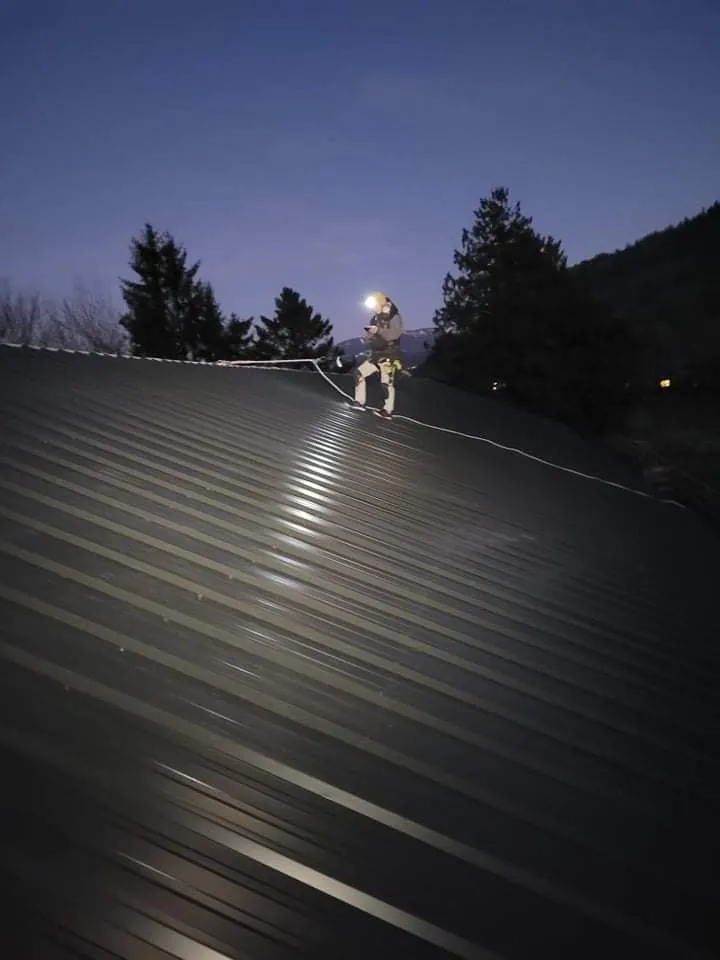
Johnny and I both have standing seam metal on our own houses in Agassiz. That tells you what we really think. The interlocking panel system means there are zero exposed fasteners for water to exploit. Rain sheets off the surface without pooling. Snow slides instead of building load. And in our moss-friendly climate, the smooth surface resists colonization far better than textured shingles.
- Zero exposed fasteners means zero fastener-related leak points over the roof's 50-plus year lifespan
- Thermal expansion panels accommodate the Fraser Valley's 40-degree seasonal temperature swings without buckling
- Moss and algae cannot grip the smooth galvalume or painted steel surface the way they embed in asphalt granules
- Standing seam handles sustained wind loads that would lift and tear 3-tab shingles during our November and December storms
- We have installed standing seam on over 200 Fraser Valley homes since 2026 with zero leak callbacks
The honest downside is cost. Standing seam runs two to three times the installed price of architectural shingles. But when Johnny and I run the math for homeowners, the 50-year lifespan versus 20-25 years for shingles in our climate makes metal cheaper per year of service. We have had that conversation at kitchen tables from Rosedale to Abbotsford, and most people who plan to stay in their home choose metal once they see the real numbers.
Architectural Asphalt Shingles: The Workhorse That Needs Backup
Most Fraser Valley homes still wear asphalt. That is fine. Architectural shingles from IKO, CertainTeed, or BP are proven products. But they need more help here than they do in the Okanagan or the Interior. Johnny and I learned this the hard way when we inspected a five-year-old roof in Chilliwack that already had moss embedded in every shingle tab. The homeowner had never treated it. The granules were gone in patches, and the fiberglass mat was exposed. Five years.
- Choose laminated architectural shingles rated for 130 km/h-plus wind. We will not install anything less in the Fraser Valley.
- Budget for annual moss treatment. Zinc strip installation at the ridge reduces moss growth but does not eliminate it east of Abbotsford.
- Insist on synthetic underlayment across the full deck, not just felt paper. Synthetic does not absorb moisture if wind-driven rain gets under the shingles.
- Expect a realistic lifespan of 20-25 years in the eastern Fraser Valley, regardless of what the manufacturer warranty states for drier climates.
We install a zinc ridge strip on every asphalt shingle roof at no extra charge. It releases zinc carbonate when it rains, which inhibits moss and algae growth. Small detail, big difference over 20 years in Agassiz or Harrison.
Materials We Steer Homeowners Away From
Johnny has a saying: "Just because you can buy it at the supply house does not mean it belongs on a Fraser Valley roof." He is right. Some materials that perform well in drier parts of BC are a liability here.
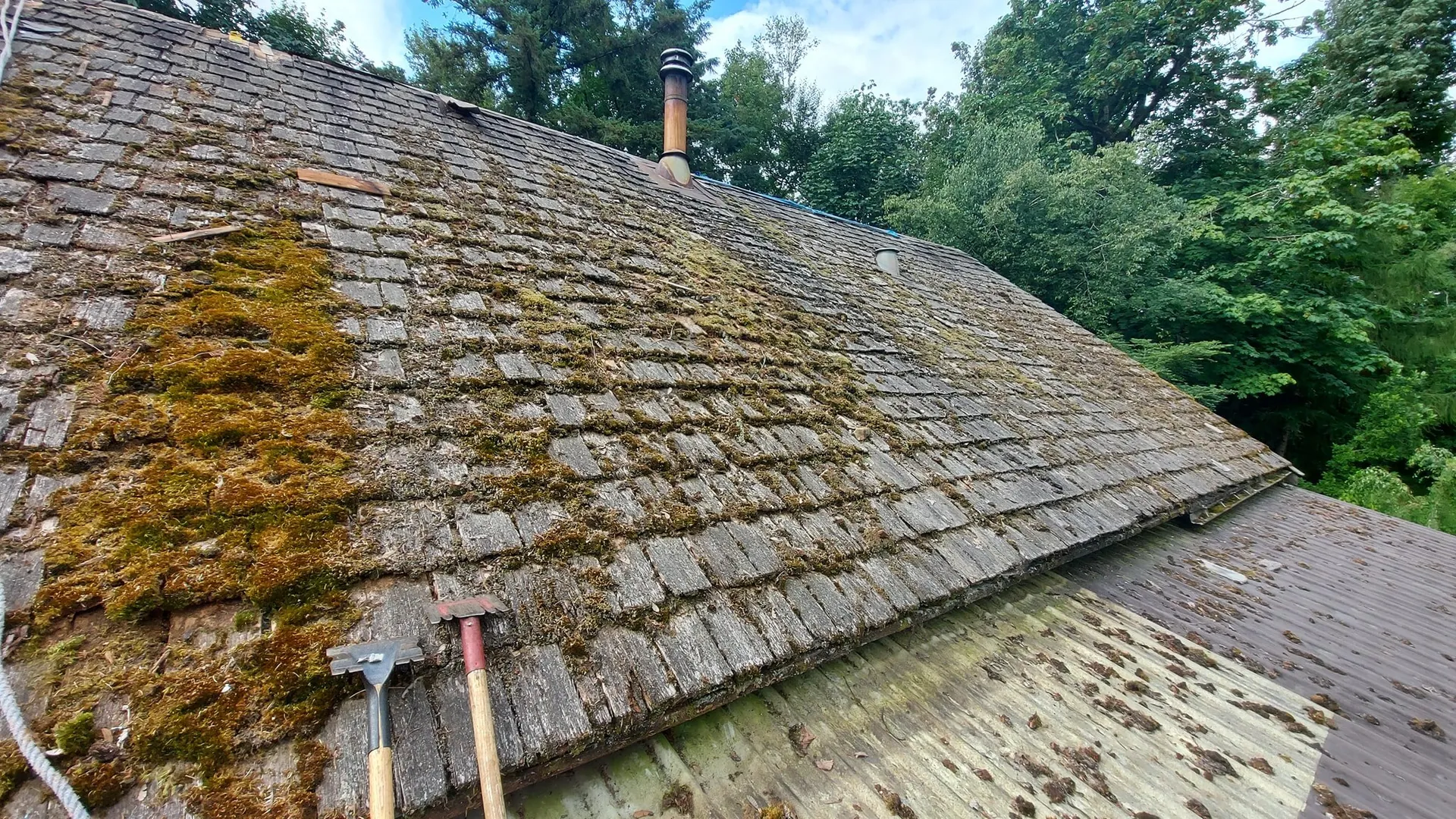
- Untreated cedar shakes: We tear off more rotted cedar in a year than any other material. In Agassiz and Harrison, untreated cedar lasts 12-15 years before the splits fill with moisture and the shake curls. Treated cedar buys you time, but the maintenance schedule is relentless.
- Three-tab asphalt shingles: The single-layer design lifts in wind, and the thinner profile means less granule protection against our constant moisture. We have never installed a 3-tab and never will.
- Exposed-fastener metal panels: The screws penetrate the panel surface, and every penetration is a future leak point. Rubber washers degrade in UV and cold cycling. We see failures at the 8-10 year mark, right when homeowners think they are set for decades.
- Concrete tiles without structural reinforcement: They work beautifully on reinforced structures, but many Fraser Valley homes were not framed for the weight. We have seen cracked trusses from concrete tile installations that skipped the engineering assessment.
If a contractor offers you 3-tab shingles or exposed-fastener metal in the Fraser Valley, walk away. Both products will fail prematurely in our climate. This is not opinion. It is what we see every week on tear-off jobs.
The Detail Most Contractors Skip: Underlayment Strategy
This is the part that gets personal for Johnny and me. We came from boilermaking, where every weld gets X-rayed. Every joint gets inspected. Nobody sees the inside of a pipe, but the weld better be perfect because a failure means someone gets hurt. We bring that same mentality to the layer nobody sees: underlayment.
BC Building Code requires ice-and-water shield membrane along the eaves. The minimum is two feet past the interior wall line. Most contractors hit that minimum and move on. We run our ice-and-water shield a minimum of six feet up from every eave edge, plus full coverage in every valley, around every penetration, and at every transition point. On the rest of the deck, we use synthetic underlayment, never felt paper.
- Felt paper absorbs water. If wind-driven rain gets past your shingles, felt paper becomes a moisture trap. Synthetic underlayment repels water.
- Ice-and-water shield self-seals around nail penetrations. When we nail through it during shingle installation, the rubberized asphalt closes around each nail shank, creating a waterproof seal that felt paper cannot match.
- Our six-foot eave coverage exceeds code minimum by three to four times. Every inch matters during the January storms that push rain sideways up the roof slope in Agassiz and Hope.
- We overlap synthetic underlayment sheets by six inches minimum, sealed with manufacturer-recommended tape. No staple-only attachment.
Ask any roofing contractor what underlayment they use and how far they run ice-and-water shield past the eave. If they say "to code minimum" or cannot answer, keep looking. In the Fraser Valley, underlayment is the last line of defense, and it needs to be bomb-proof. Call us at (778) 860-4747 and we will walk you through exactly what goes on your deck before a single shingle is nailed.

Matching Material to Your Fraser Valley Microclimate
One thing Johnny and I figured out early is that the Fraser Valley is not one climate. It is a corridor of microclimates. A roof in Abbotsford faces different conditions than one in Hope. Here is what five years of local work has taught us.
- Hope and Yale: Highest wind exposure in the valley. Mountain pass funneling means sustained gusts that test every fastener and seal. Standing seam metal is our strongest recommendation here.
- Harrison Hot Springs and Agassiz: Extreme moisture with moderate wind. The lake effect creates persistent dampness that accelerates organic growth on any textured surface. Metal or well-maintained architectural shingles both work.
- Chilliwack and Rosedale: Moderate rainfall with occasional severe windstorms. Architectural shingles with proper underlayment perform well and offer the best cost-to-lifespan ratio for most budgets.
- Abbotsford and Mission: Slightly lower rainfall than the eastern valley, but still far above the Canadian average. Any quality material works here with proper installation. Budget-conscious homeowners can choose architectural shingles with confidence.
We give this same breakdown to every homeowner during our free consultations. Johnny and I would rather steer someone toward affordable shingles that suit their location than upsell metal where it is not necessary. We are Fraser Roofing Ltd., not a metal roofing sales company. Our job is matching the right material to your roof, your budget, and your specific slice of the Fraser Valley.
What We Would Tell Our Own Fathers
Our dad is part of the reason Johnny and I started this company. When we are standing on a roof in Agassiz or walking a homeowner through their options in Chilliwack, we ask ourselves: what would we put on Dad's house? That question cuts through every upsell temptation and every corner-cutting impulse. The answer has guided every one of our 500-plus installations since 2026.
If you are choosing roofing materials for a Fraser Valley home, call us at (778) 860-4747. Johnny or I will come out, look at your roof, look at your trees, check your exposure, and give you an honest recommendation. No charge, no pressure. We are based right here in Agassiz, and we are not going anywhere.