Johnny and I make the drive from Agassiz to Chilliwack so often that we could do it blindfolded. Down Highway 9, past the corn fields, over the Vedder bridge, and into a city that has changed more in the last ten years than most places change in fifty. Chilliwack has always been the Fraser Valley's heartland — dairy farms, corn mazes, rodeo grounds — but now there are subdivisions climbing Promontory Heights and townhome complexes filling every empty lot in Sardis. That mix of old agricultural roots and rapid new growth creates roofing situations we see nowhere else in the valley.
Why Two Agassiz Roofers Know Chilliwack Better Than You Might Expect
People sometimes ask why they should hire roofers from Agassiz when there are contractors in Chilliwack itself. Fair question. The answer is simple: we have been working on Chilliwack roofs since we founded Fraser Roofing Ltd. in 2026, and the 25-minute drive means we are usually on-site before most local guys finish their coffee. More importantly, Johnny and I are Red Seal Journeyman Boilermakers who came out of the Alberta oil sands — Suncor, Syncrude, CNRL Kearl Lake — where a bad weld on a pressure vessel could kill someone. That zero-tolerance mindset came with us. Every tool tied off. Every flashing triple-checked. We do not leave a Chilliwack job until the roof is watertight, period.
The Chilliwack Climate: Drier Than Agassiz, But Do Not Get Comfortable
Chilliwack sits in a sweet spot — it gets less rain than Hope or Agassiz, but that is like saying you got punched less than the other guy in a bar fight. You still got hit. Chilliwack averages around 1,200 to 1,400mm of precipitation annually. That is still double what Toronto sees. And Chilliwack has its own weather tricks. Summer heat builds fast in the valley bottom, regularly pushing past 35 degrees and baking south-facing roofs. Then winter rolls in with freeze-thaw cycling that exploits every tiny crack in your shingle surface. The combination of wet winters and hot summers is harder on roofing materials than constant rain alone.
- Annual rainfall of 1,200-1,400mm — less than Hope but still heavy by Canadian standards
- Summer heat regularly exceeds 35 degrees Celsius, causing thermal expansion stress on roofing materials
- Freeze-thaw cycling from November through March that works moisture into cracks and lifts shingle edges
- Chilliwack Mountain channels wind unpredictably — properties on the east slopes catch gusts that flatten areas miss entirely
- River fog from the Vedder and Chilliwack River systems keeps moss thriving through the shoulder seasons
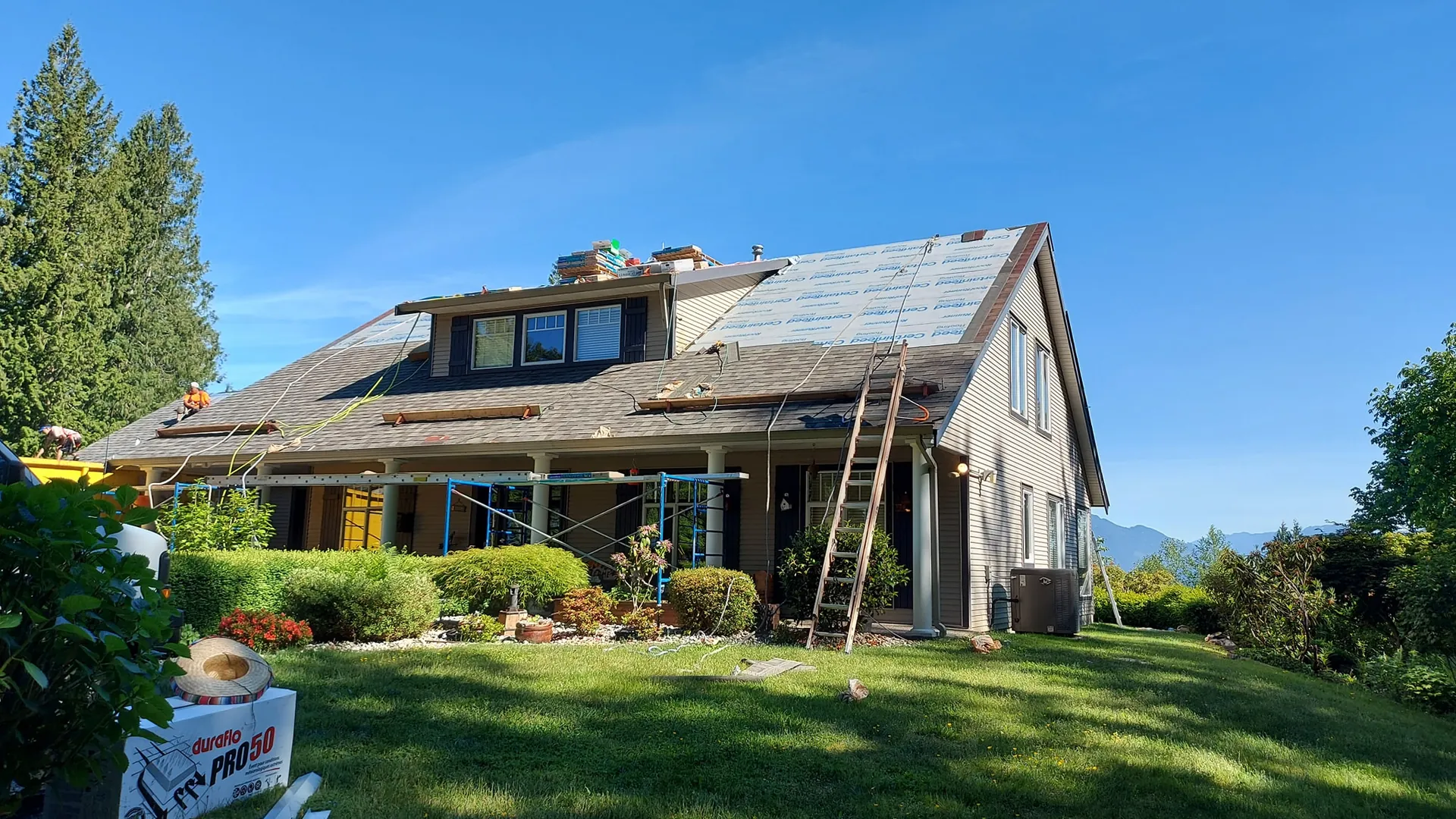
We tore off a roof on a Promontory Heights home last year that was only eleven years old. The south-facing slope had baked so badly in summer heat that the shingles were brittle and crumbling. The north side, shaded by trees, was buried under three inches of moss. Same roof, two completely different failure modes. That is Chilliwack weather in a nutshell — it attacks from every angle.
Neighbourhood by Neighbourhood: What We See on Chilliwack Roofs
Chilliwack is not one place when it comes to roofing. The challenges shift dramatically depending on which part of the city you live in. After working on roofs across every major neighbourhood, we have learned the patterns.
- Sardis — Mature trees and 1980s-era homes with original or once-replaced roofs. Moss is the dominant problem. Many homes still have inadequate attic ventilation that was code-compliant when built but does not meet modern standards.
- Vedder / Vedder Crossing — Low-lying area near the river with higher humidity. Homes here deal with persistent dampness and accelerated granule loss on asphalt shingles. Flooding history means some properties also have compromised foundations that affect rooflines.
- Promontory — Newer construction from the 2000s and 2010s. Generally in better shape but builder-grade shingles are hitting their 15-year wall. South-facing slopes on the hillside take brutal summer heat.
- Chilliwack Mountain — Wind. Properties along the upper roads catch channelled gusts that can lift improperly fastened shingles. We use six nails per shingle instead of four on mountain properties as standard.
- Downtown / Older Chilliwack — Character homes from the 1940s-1970s. Often multiple layers of roofing stacked on top of each other. Some need full tear-down to the deck before re-roofing.
- Ryder Lake / Rosedale border — Rural acreages with multiple outbuildings. Barns, workshops, and hay shelters that need metal roofing for longevity and fire safety.
Agricultural Properties: The Roofing Challenge Nobody Talks About
Chilliwack is still an agricultural powerhouse. Dairy operations, poultry farms, berry fields — they all have buildings that need roofs. And agricultural roofing is a completely different discipline than residential work. We have re-roofed dairy barns where the ammonia fumes from below had corroded standard fasteners within five years. We have installed metal panels on equipment shelters that needed to withstand the weight of a firefighter walking the ridge during an emergency. Johnny grew up around farms. He understands that when a barn roof leaks, it is not just an inconvenience — it is livestock health, feed storage, and livelihood on the line.
For agricultural buildings, we exclusively use stainless steel or hot-dipped galvanized fasteners rated for corrosive environments. Standard zinc-plated screws fail too fast in barn atmospheres. It costs a few hundred dollars more on a large building but prevents catastrophic fastener failure down the road.

New Construction in Chilliwack: What Builders Skip and You Should Know
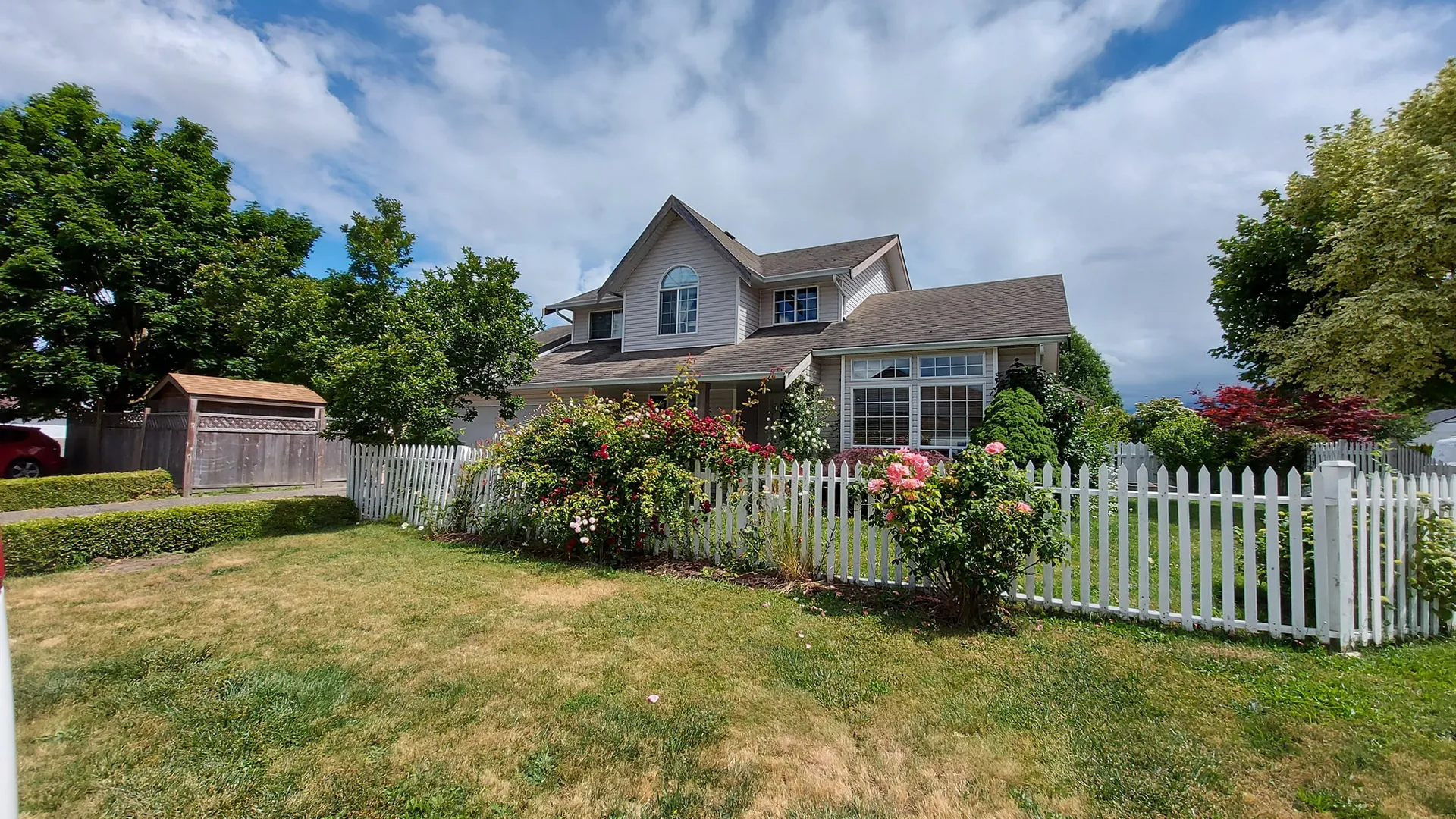
Chilliwack is growing fast. New subdivisions are going in along Promontory, off Vedder Road, and in the eastern expansion areas. We get calls from homeowners in five-year-old homes who are already seeing issues, and the pattern is always the same: builder-grade materials installed at minimum code specifications. Minimum code keeps you legal. It does not keep you dry for 25 years in the Fraser Valley.
- Builder-grade 3-tab shingles rated for 20 years that realistically last 12-15 in our climate
- Felt paper underlayment instead of synthetic — felt breaks down fast under persistent moisture
- Minimum code ventilation that does not account for our humidity levels
- Flashing installed with sealant alone instead of mechanically fastened
- Ice and water shield run only three feet from the eaves when six feet is what the Fraser Valley demands
If you are buying a new build in Chilliwack, ask your builder what underlayment they are using and how far their ice and water shield extends from the eaves. If the answers are felt paper and three feet, budget for a roof upgrade sooner than you planned. Or call us before closing and we will walk the roof with you — free of charge.

What We Bring From Agassiz to Every Chilliwack Job
Our approach does not change based on the drive. Every Chilliwack roof gets the same standards we apply in Agassiz, Harrison, Hope, or anywhere else in the valley. Johnny and I are on every job. We do not send a crew and disappear. We source materials from Roofmart in Chilliwack and Pro-Line Building Centre, so everything is local and available same-day when weather windows open. And we stay until the job is done — not until the clock says five.
- Synthetic underlayment on every residential install — we never use felt paper in the Fraser Valley
- Ice and water shield extended six feet from the eaves, not the three-foot minimum
- Six-nail pattern on shingles for properties exposed to Chilliwack Mountain wind
- Stainless steel or hot-dipped galvanized fasteners on all agricultural and high-exposure buildings
- Full attic ventilation assessment included with every re-roof — we do not just replace what was there if what was there was inadequate
- Zinc ridge strips installed as standard for long-term moss prevention

The Day We Almost Quit — And Why Chilliwack Homeowners Should Care
People ask about our story and expect some polished business origin. The truth is messier. Johnny and I started Fraser Roofing Ltd. in 2026 after leaving the oil sands. First day on a residential roof, we looked at each other and wondered what we had gotten ourselves into. Boilermaking is precise, controlled, engineered. Roofing is wind in your face, material on your back, and slopes that want to throw you off. We almost quit that first week. But roofing ended up healing something in both of us. The physical work, the honest labour, the satisfaction of driving away and knowing a family is dry tonight — it fixed things that the oil field broke. We lost people close to us along the way. Our dad worked roofs with us. My girlfriend did too. Both of them passed. Every roof we put on now carries that weight, and it is why we refuse to cut corners. Five hundred roofs later, Chilliwack homeowners get the benefit of everything we learned the hard way.
We are a family operation. When you call (778) 860-4747, you get Kory or Johnny. When we show up in Chilliwack, we are the ones on the roof. No sales team, no subcontractors, no middlemen. Just two brothers who stake their reputation on every single job.
Free Inspections for Every Chilliwack Homeowner
We offer free, no-obligation roof inspections to every homeowner in Chilliwack. We will walk your roof, check your attic, document everything with photos, and give you an honest assessment. If your roof is fine, we will tell you. If it needs work, we will show you exactly why and give you a transparent quote. No pressure, no upsell, no games. We have built our reputation in the Fraser Valley on honesty, and that starts with telling people the truth about what their roof actually needs.
Chilliwack homeowners: schedule your free inspection before the fall rains hit. October through March is when small problems become expensive ones. Call us at (778) 860-4747 or book online. We are usually in the Chilliwack area within the week.