Every manufacturer label tells you the same thing: this roof will last 25 years, 30 years, lifetime. Then you live in the Fraser Valley, and reality shows up around year 15 with moss patches, curling edges, and a ceiling stain you swear was not there last month. Johnny and I have been tearing off roofs between Hope and Abbotsford for five years now — over 500 of them through Fraser Roofing Ltd. — and the gap between what the box promises and what the valley delivers is something every homeowner here deserves to hear honestly.
Last updated: February 2026
The Numbers on the Box Are Not Your Numbers
Roofing manufacturers test their products in controlled environments. Those numbers assume moderate rainfall, dry summers, and homeowners who maintain things on schedule. The Fraser Valley gives you none of that. We get 1,500 to 1,800mm of rain per year depending on where you sit between Hope and Abbotsford. The river fog keeps everything damp for months. And the moss — the moss is relentless. So when I give you lifespan numbers, these are not from a lab. These are from standing on roofs across Agassiz, Chilliwack, Harrison, and Hope, pulling shingles that were supposed to have another decade left.
Real Fraser Valley Lifespans: Material by Material
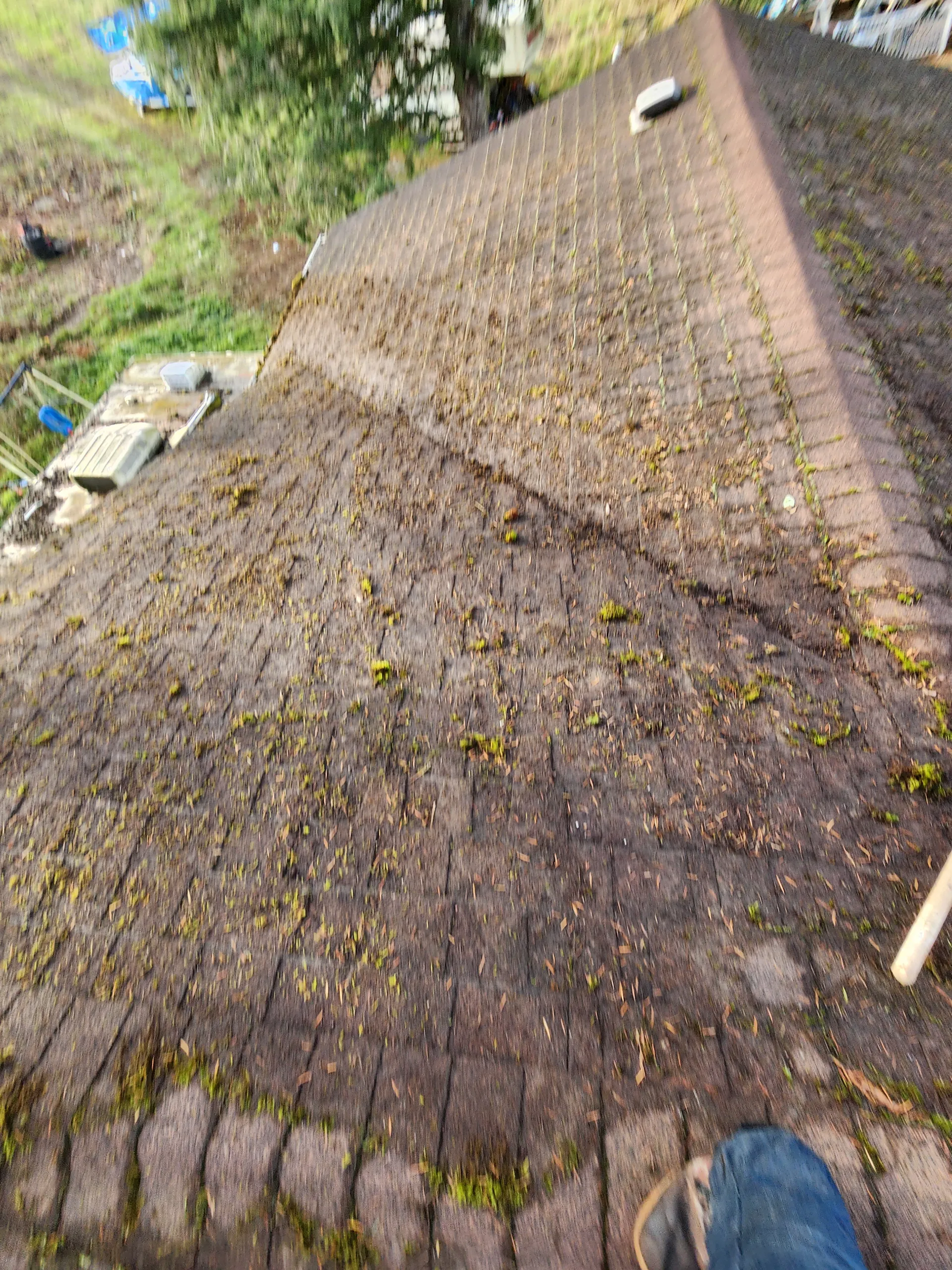
Here is what we actually see when we tear off roofs in this valley. These numbers represent the average condition at removal — not catastrophic failure, but the point where repair costs start exceeding replacement value.
- 3-tab asphalt shingles: 12-18 years (rated 20-25). The thin single-layer construction cannot handle persistent moisture. We pulled a 14-year-old 3-tab roof in Rosedale last fall that looked 25 years old.
- Architectural (laminate) shingles: 18-25 years (rated 30+). The extra layer helps, but moss still finds the textured surface irresistible. Best performers we see are the ones on south-facing slopes with full sun.
- Standing seam metal: 45-60+ years (rated 50-70). This is the material the Fraser Valley cannot kill. No exposed fasteners, instant water shedding, moss slides right off. We installed our first metal roof in Agassiz in 2026 and it still looks brand new.
- Corrugated metal (exposed fastener): 25-35 years (rated 40). Good value, but the exposed screws and rubber washers are the weak point. Every washer is a potential leak in 15-20 years.
- Cedar shakes: 12-20 years (rated 20-30). Honestly, cedar struggles here. The moisture never lets it dry, and untreated shakes become a moss garden within five years. We have pulled cedar roofs near Harrison Lake that were rotting from the inside out at 15 years.
- Concrete and clay tiles: 35-50 years (rated 50+). Durable material, but the underlayment beneath them fails faster in our climate. The tiles survive — it is everything underneath that gives out.
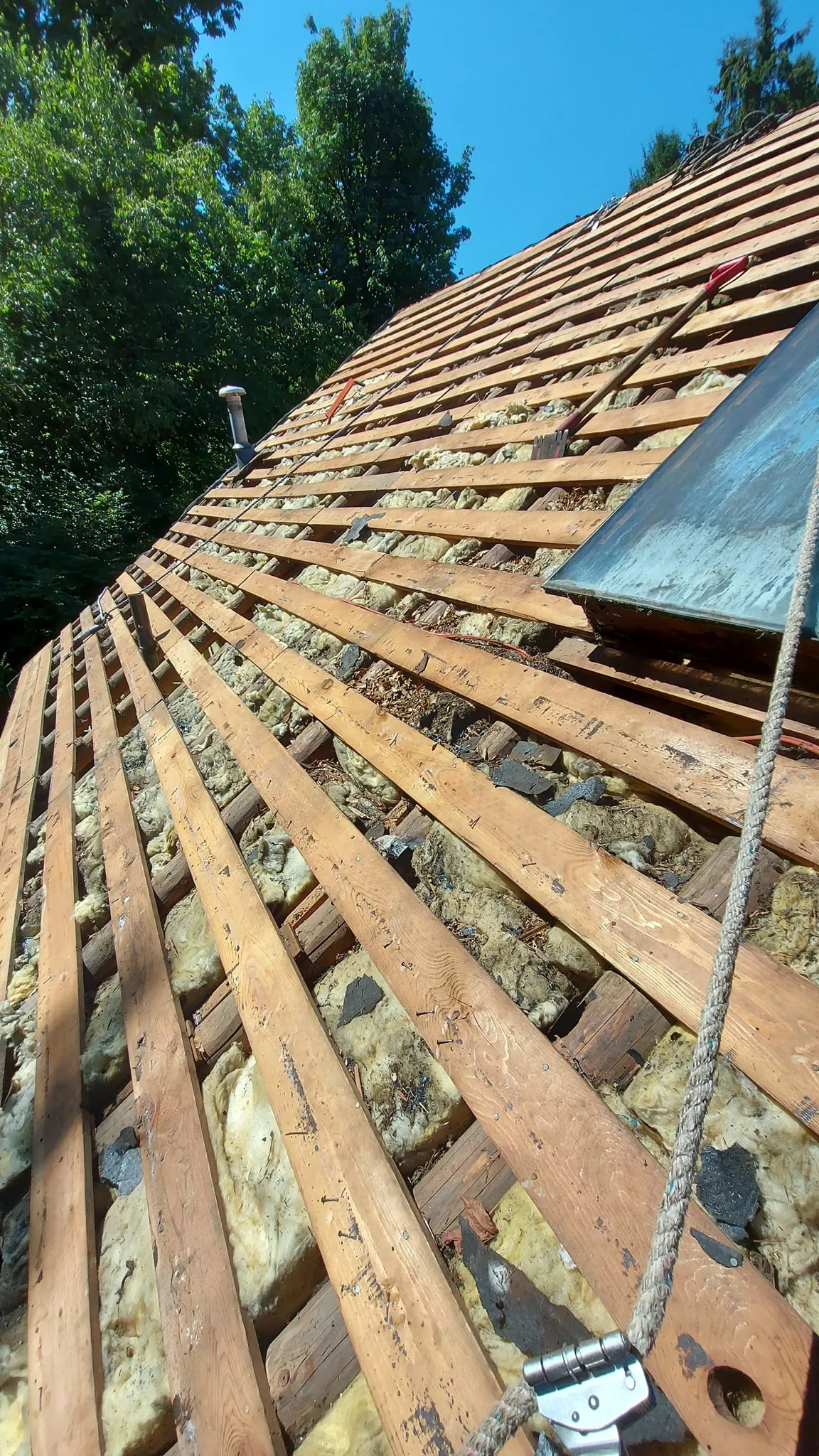
The single biggest factor we see in premature roof failure is not the material itself — it is ventilation. A properly ventilated attic can add 5-8 years to any roofing material in the Fraser Valley. A poorly ventilated attic can shave off the same amount. We have pulled 12-year-old architectural shingles off homes in Chilliwack where the attic had zero ridge ventilation and the sheathing was black with mold.
What the Fraser Valley Does to Roofs That Other Places Do Not
Johnny and I came to roofing from the Alberta oil sands. We were Red Seal Boilermakers — we understood materials, weathering, and what happens to steel and coatings under harsh conditions. But the Fraser Valley taught us something different. It is not one dramatic assault. It is a slow, patient siege that most homeowners never notice until the damage is serious.
- Persistent saturation — your roof spends five to six months continuously damp. Materials that need to dry out to maintain their integrity never get the chance.
- Moss colonization — it starts as a green fuzz on north-facing slopes and grows into a mat that holds water against your shingles like a soaked towel that never gets wrung out.
- River fog humidity — the Fraser River pumps moisture into the valley air year-round. Even when it is not raining, your roof is absorbing humidity above 80 percent for months at a time.
- Freeze-thaw cycling — in October and March, temperatures swing from -2 at night to +12 during the day. Any trapped moisture expands and contracts, cracking sealant bonds and loosening fasteners.
- Debris load from Douglas fir, western red cedar, and big leaf maple — needles and leaves create dams on the roof surface that hold water and accelerate decay.
A study from the BC Housing Research Centre found that roofs in the lower mainland coastal region experience roughly 30 percent more moisture-related degradation than identical installations in the BC interior. Our tear-off data from Agassiz and Hope aligns with that number almost exactly.
The Maintenance Equation: Real Numbers from Real Roofs
I am not going to tell you maintenance is cheap and easy. It is not. But the math is straightforward and I have the tear-off data to back it up. Across our projects, roofs that received consistent annual attention lasted 25-35 percent longer than neglected roofs of the same material and age in the same neighbourhoods.
- Annual gutter cleaning (twice minimum, three times if heavy tree cover): prevents water backup under drip edge and fascia rot. Cost: $150-300 per cleaning.
- Moss treatment every 2-3 years: zinc sulfate or professional soft wash. Stops moss from lifting shingle edges and holding moisture. Cost: $300-600 per treatment.
- Flashing inspection and sealant touch-up every 3 years: the most common leak source we see is failed flashing sealant around chimneys and vent boots. Cost: $200-500 per service.
- Attic ventilation check: make sure soffit vents are not blocked by insulation and ridge vents are functioning. This is free to check yourself.
- Professional inspection every 18-24 months: catches problems while they are still $300 repairs instead of $3,000 emergencies. Cost: free from Fraser Roofing Ltd..
Add it up: roughly $400-800 per year in maintenance. Compare that to a $15,000-25,000 premature roof replacement. We had a customer in Agassiz with IKO Cambridge shingles installed in 2007 who maintained them religiously — annual moss treatment, gutters cleaned three times a year, we re-sealed his chimney flashing in 2022. That roof is still performing well at 19 years. His neighbour with identical shingles installed the same year had to replace at 14 because of neglected moss damage. Five years of extra life for the cost of a few hundred dollars annually.
When to Stop Repairing and Start Replacing
One of the hardest conversations we have is telling someone their roof is past saving. Nobody wants to hear it. But there is a point where every dollar you put into repairs is money you will never get back. Here is how Johnny and I evaluate that threshold:
- The repair-to-value ratio: if a single repair exceeds 30 percent of the cost of a full replacement, it is time to replace. A $4,000 repair on a roof that costs $15,000 to replace is bad math.
- Multiple leak sources: one leak is a repair. Three leaks means the entire membrane is deteriorating and patching one spot just moves the water to the next weak point.
- Granule loss visible in gutters: when you see sand-like granules accumulating in your downspouts after every rain, the shingle surface is eroding and UV protection is compromised.
- Widespread moss lifting: if moss has established itself across more than 40 percent of the roof surface and is lifting shingle edges, cleaning alone will not save it because the damage underneath is already done.
- Sagging or soft spots on the deck: if you can feel give underfoot when walking on the roof, the sheathing is compromised. This is not a shingle problem — it is a structural issue.
Not sure where your roof falls on this spectrum? We do free inspections across the Fraser Valley from Hope to Abbotsford. No sales pitch, no pressure — just an honest assessment from roofers who live in the same climate you do. Call us at (778) 860-4747 or book through our website. We will tell you exactly how much life is left and whether spending money on repairs still makes sense.
Why We Recommend Metal for Long-Term Fraser Valley Homeowners
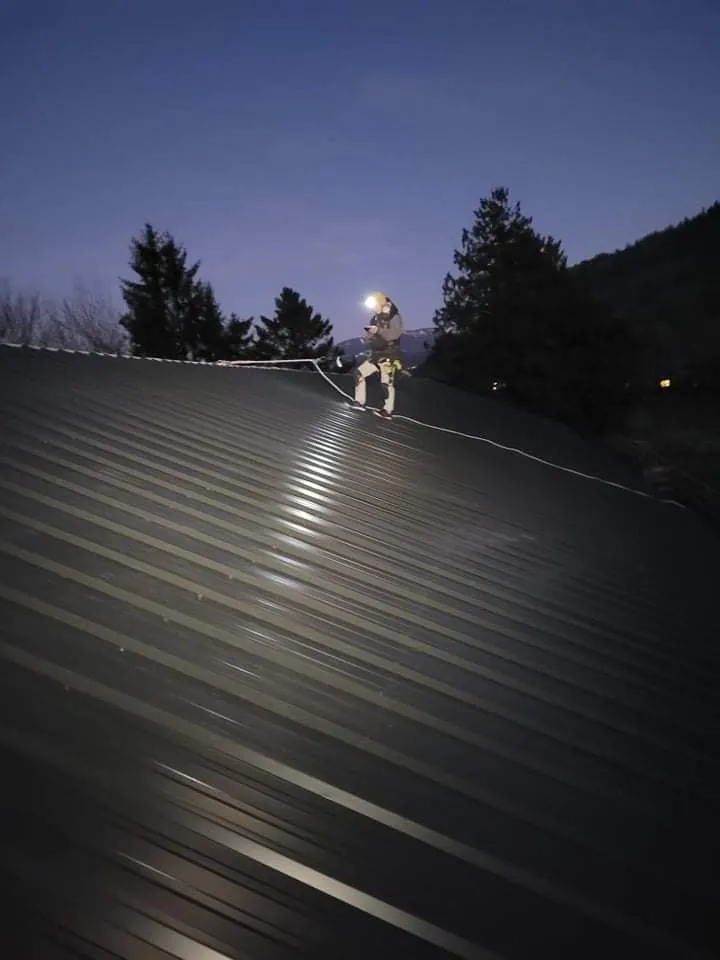
If you are planning to stay in your home for 15 or more years, standing seam metal is the best investment you can make in this valley. I know the upfront cost is higher — roughly double what architectural shingles cost. But here is the reality: in the Fraser Valley climate, you will re-shingle at least twice in the time a single metal roof lasts. When you factor in the second shingle replacement plus the ongoing maintenance costs, metal ends up being cheaper over any timeframe longer than 20 years.
We have installed metal roofs from Hope to Abbotsford since 2026. Not a single callback for leaks. Not one. The standing seam system sheds the Fraser Valley rain before it has a chance to sit. Moss cannot grip the surface. There are no exposed fasteners to corrode. And when the wind rips through the valley in November, the interlocking panels hold while we are getting calls from shingle roofs that lost half a slope. That is the kind of durability that makes sense when you live where we live.
The average Fraser Valley homeowner who switches from asphalt to standing seam metal saves approximately $8,000-15,000 over a 40-year ownership period when accounting for avoided re-roofing, reduced maintenance, lower insurance premiums, and energy savings from reflective coatings. The break-even point is typically between year 12 and year 18.
Your Roof Is Not a Set-It-and-Forget-It Investment
The biggest mistake we see Fraser Valley homeowners make is treating their roof like a 25-year appliance that runs on autopilot. It is not. It is the most important weatherproofing system your house has, and it lives under some of the most demanding conditions in Canada. The homeowners who get the most years out of their roofs are the ones who pay attention — who climb out after a big storm and look for debris, who schedule their moss treatment before the green fuzz becomes a green carpet, and who call us when something looks off instead of waiting until the ceiling is stained.
Johnny and I started Fraser Roofing Ltd. in 2026 because we wanted to bring the discipline we learned in the oil fields to roofing. In the oil sands, you do not cut corners on safety or weatherproofing because people's lives depend on it. We bring that same mentality to every roof in the Fraser Valley. If your roof is getting older and you are wondering how much time is left, give us a call at (778) 860-4747. We will come out, walk it with you, and give you the honest answer — even if that answer is "you have got plenty of life left, do not spend the money yet."